Why Bali Is Asia-Pacific’s Next Superyacht Hub
Bali is on a credible path to becoming the Asia-Pacific superyacht hub the region has lacked between Singapore and Australia. Three forces are converging as of 2026: a decade of Indonesian cabotage and charter reforms that opened the archipelago to foreign-flagged yachts, the 2023 designation of Kura Kura Bali on Serangan Island as a Special Economic Zone (SEZ), and a phased marina masterplan publicly discussed in the range of 120–140 berths — a scale no other Indonesian facility currently offers. For owners, captains and investors, the question is no longer whether Bali joins the superyacht map, but how fast the infrastructure catches up with the demand that already anchors off Benoa and Serangan every season.
Why Is Bali Emerging as the Asia-Pacific Superyacht Hub?
Look at a chart of the Indo-Pacific and the logic is immediate. Superyachts repositioning between the Mediterranean, Southeast Asia and Australasia funnel through a corridor where Bali sits almost exactly midway between Singapore’s marinas and Australia’s northern ports. Approximate passage distances tell the story:
| Passage | Approx. distance | Role on the route |
|---|---|---|
| Singapore → Benoa, Bali | ~1,000 nm | Staging leg from Southeast Asia’s refit and provisioning hub |
| Darwin → Benoa, Bali | ~960 nm | Shortest link to the Australian season |
| Fremantle → Benoa, Bali | ~1,400 nm | Indian Ocean approach from Western Australia |
Beyond position, Bali offers what neither endpoint can: direct access to the world’s most talked-about tropical cruising grounds. Komodo, the Banda Sea, Triton Bay and Raja Ampat are all reached from Bali without an ocean crossing, and Indonesian waters at Bali’s latitude sit largely outside the main South Pacific cyclone belt, extending the usable season. Singapore has world-class yards but chronically limited superyacht berthing; Australia has grown fast since it opened foreign-flagged charter under its Special Recreational Vessels Act in 2019, but it is a long passage from Asia. An Asia-Pacific superyacht hub in Bali fills the gap between them — a place to base, provision, crew and turn charters around in the middle of the cruising grounds themselves.
What Do Indonesia’s Cabotage Reforms Actually Change?
For years, Indonesia’s cabotage principle under its 2008 Shipping Law — reserving domestic marine commerce for Indonesian-flagged vessels — combined with the slow CAIT sailing-permit regime to make the archipelago one of the hardest premium destinations to visit by yacht. That has changed in stages. A 2015 presidential regulation dismantled the old permit process for visiting yachts and designated entry ports, online clearance systems followed, and successive marine-tourism reforms have created workable pathways for foreign-flagged superyachts to cruise — and, under licensed structures, to charter — in Indonesian waters.
The practical effect: itineraries that once required months of paperwork can now be arranged in weeks through a competent local agent. Captains still need to navigate flag, tax, crew-visa and charter-licensing details carefully — Indonesia’s rules continue to evolve and enforcement varies by port — which is precisely why yacht agency support on the ground in Bali has become a service category of its own. But the direction of travel is unambiguous: per 2026, Indonesia wants superyacht traffic, and regulation is being shaped to attract it rather than repel it.
How Do Kura Kura Bali’s SEZ Incentives Work?
Kura Kura Bali is a long-term development of Serangan Island, minutes from Sanur and Denpasar, and in 2023 it was designated a Special Economic Zone focused on tourism and the creative economy. SEZ status matters to the marina story because Indonesia’s SEZ framework typically carries corporate income-tax holidays or reductions for qualifying investment, import-duty and VAT facilities on capital goods, and streamlined licensing and immigration arrangements — exactly the levers needed to make marina construction, marine services and refit investment bankable in a market that has never had them at scale.
For the superyacht sector specifically, the interesting question is whether SEZ facilities will eventually extend to the pain points owners actually feel: temporary-import treatment for vessels, duty treatment of spares and equipment, and clean structures for foreign charter operations. Those details depend on implementing regulations and individual investment agreements, so any operator or investor should verify the current rules before committing capital rather than relying on headline summaries — including this one. Still, the SEZ designation is the single strongest signal that the Kura Kura marina is intended as commercial infrastructure for an Asia-Pacific superyacht hub, not a decorative amenity for a resort island.
How Big Is the Planned Kura Kura Marina — and What Exists Today?
Masterplan material presented publicly for Kura Kura Bali has discussed a marina developed in phases with capacity in the 120–140 berth range, including berths dimensioned for superyachts — which would make it the largest purpose-built yacht facility in Indonesia when complete. Timelines for phased projects of this scale shift, so treat berth counts and delivery dates as indicative until slips are physically in the water. Our detailed, regularly updated breakdown of sizes, specifications and availability is in the Kura Kura superyacht berths guide.
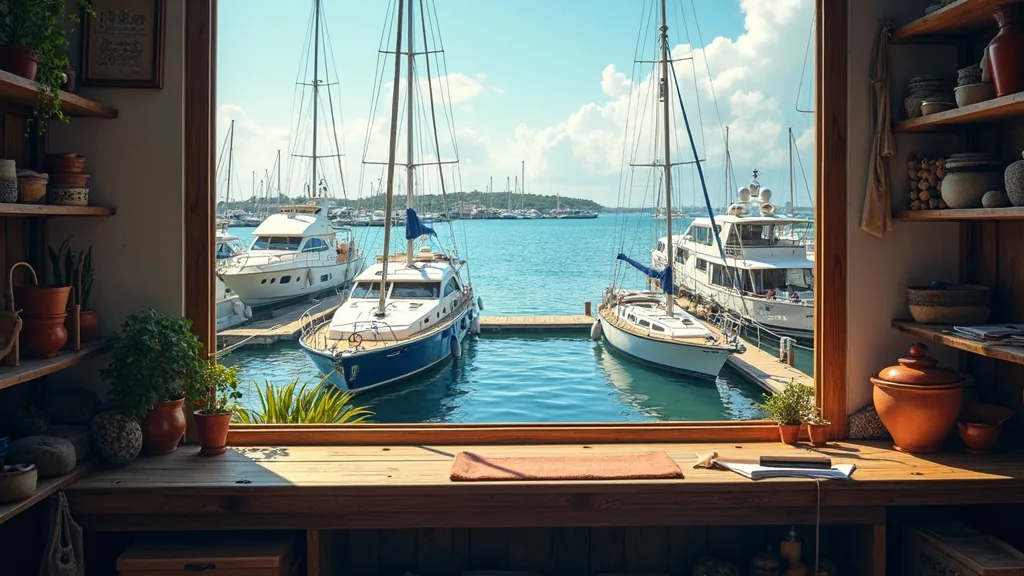
What exists today is more modest but genuinely functional: Serangan already operates as a working marina gateway with a fuel dock, provisioning access and a growing shoreside village, while Benoa Marina across the channel remains Bali’s established port of entry for visiting yachts. Both are busy and both are capacity-constrained for vessels over 40 metres — most large yachts calling at Bali still anchor off. That mismatch between demand and dock space is visible in pricing; see our current Bali berthing rates overview for indicative figures, with the caveat that rates are set by operators and change with demand.
What Is Still Missing — and Where the Opportunity Lies
Honest analysis requires naming the gaps. Bali as of 2026 has no superyacht-grade refit yard; serious work still means Singapore, Thailand or Australia. Skilled marine trades, chandlery depth, crew training and standardized agency services all lag the traffic already arriving. Insurance and finance providers still price Indonesia conservatively.
But every one of those gaps is an investment thesis. A hub in the middle of the cruising grounds with SEZ incentives behind it is precisely where refit capacity, provisioning logistics, crew services and charter management get built next. The pattern is familiar from Palma, Fort Lauderdale and Phuket: berthing infrastructure arrives first, and the service economy compounds around it. The operators who establish marine-services capability in Bali before the marina reaches full build-out will hold the incumbency advantage when it does.
The Ecosystem Behind the Hub: Building, Crewing and Managing Yachts in Indonesia
One asset the Asia-Pacific superyacht hub conversation usually overlooks: Indonesia already builds world-class charter vessels. The phinisi schooners that dominate Komodo and Raja Ampat charter fleets are constructed by master shipwrights in Bulukumba, South Sulawesi — a boatbuilding tradition inscribed by UNESCO as intangible cultural heritage in 2017. A Bali hub does not just host foreign tonnage; it sits atop a domestic build-and-charter economy that international owners can commission into directly, from new phinisi construction to refit, crewing and charter operations.
This is where our team works. Through Juara Holding Group’s marine desk we support owners, captains and investors with yacht agency and clearance coordination in Bali, berthing enquiries for Serangan and Benoa, phinisi construction projects with established Bulukumba builders, and market-entry strategy for marine businesses looking at the Kura Kura SEZ. Part of Juara Holding Group — operating from Bali across Indonesia since 2015.
A note on independence: this website is an independent information resource and marine-services provider. We are not the official site of the Kura Kura Bali developer or the SEZ authority, and berth counts, incentives and timelines described here are indicative summaries of publicly available information as of 2026 — always confirm current details directly before making commitments.
Planning a passage through Bali, evaluating berthing options, or exploring a marine-sector investment around the Kura Kura SEZ? Message our BD team on WhatsApp at +62 811-3941-4563 or email bd@juaraholding.com — we respond fastest on WhatsApp and can walk you through berthing, agency and build options in one conversation.