
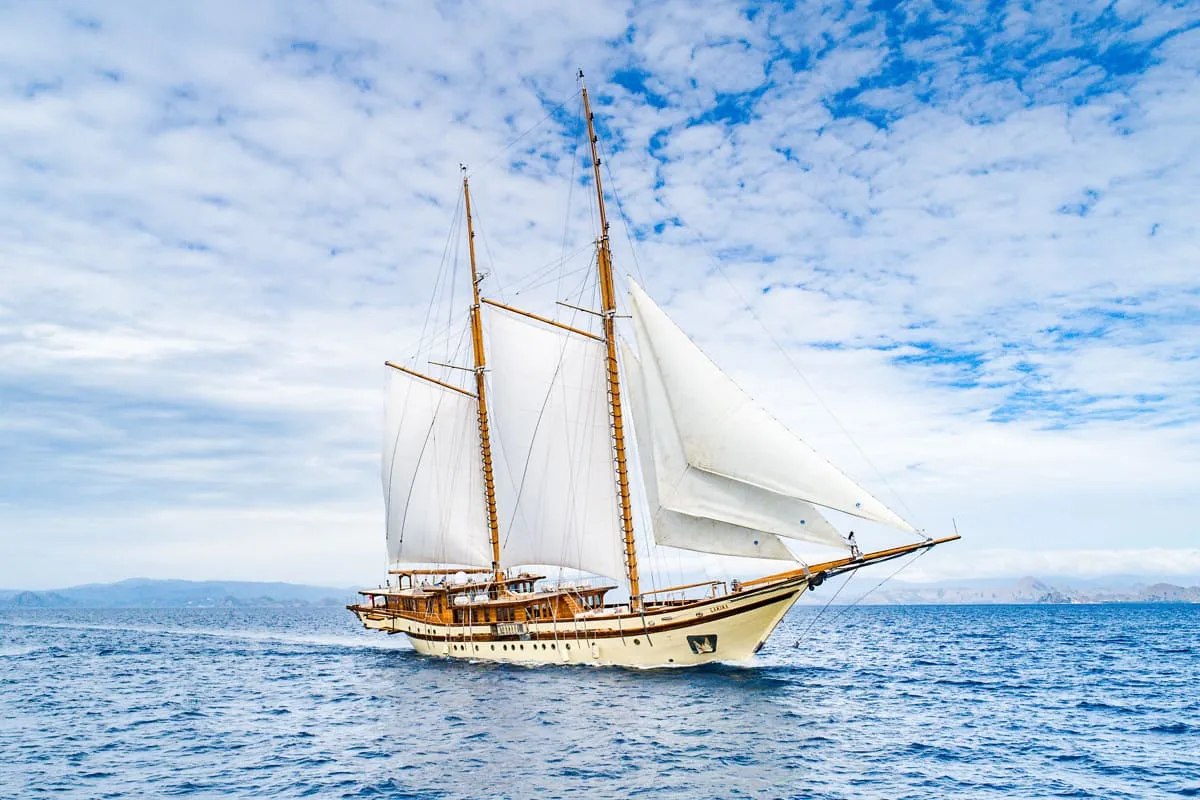
Phinisi Yacht Construction in Indonesia
Phinisi yacht construction is the craft of building large wooden sailing yachts in Indonesian yards — above all in Bulukumba, South Sulawesi, where hulls of 30 to 50 meters and more are still raised by hand on open beach. Through Juara Holding Group’s yard network, active since 2015, we design, build, and commission phinisi for private owners and charter investors, then place them into revenue service.
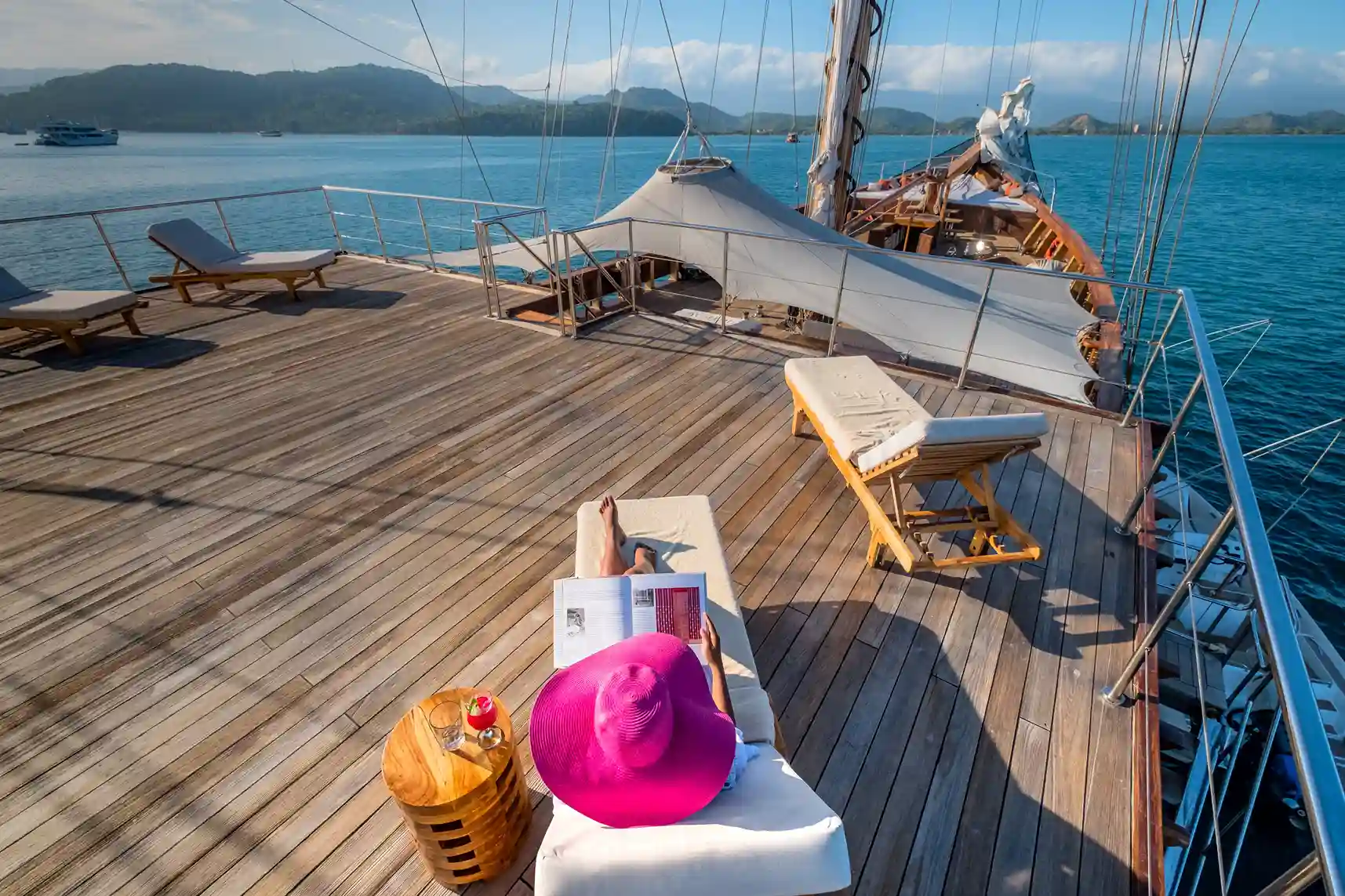
A UNESCO-Listed Craft, Engineered for Modern Owners
In 2017, UNESCO inscribed the “Art of boatbuilding in South Sulawesi” on its Intangible Cultural Heritage list. The listing centers on Bulukumba Regency — the shorelines of Tana Beru, Bira, and Lemo-Lemo — and on the Konjo boatbuilding community that has carried hull-raising knowledge across generations.
What the listing recognizes is easy to see and hard to overstate. Master builders lay a keel on the sand, then raise a wooden hull of 30, 40, or 50-plus meters by hand, plank by plank. A modern phinisi yacht adds naval architecture, marine engineering, and certified systems on top of that inherited skill. The hull carries the heritage; everything above and inside it is specified to the standard a charter guest, a captain, and an insurer expect in 2026.
This is not sentiment. Indonesia registers 17,508 officially named islands with the United Nations, and a shallow-draft wooden sailing vessel with long range, stability at anchor, and generous deck area remains one of the most practical platforms ever devised for cruising them.
Phinisi Yacht Construction Through Our Yard Network
We build through our group’s operating brands rather than a single yard, which lets us match each project to the right beach, the right master builders, and the right fit-out team. All four desks below answer to one thread.
| Brand | Base | Build focus |
|---|---|---|
| Bulukumba Boat Builders | Tanjung Bira, South Sulawesi | Phinisi hulls hand-raised on the shore in traditional woods — Ulin ironwood and Bitti — documented with honest build cards |
| Labuan Bajo Boat Builders | Labuan Bajo, Flores | Phinisi and wooden boats pairing traditional craftsmanship with modern standards, minutes from the Komodo charter grounds |
| Boat Construction Indonesia | Group project brand | Custom phinisi, luxury yachts, liveaboard and dive boats, expedition vessels, catamarans |
| Komodo Luxury — Boat Services | Labuan Bajo | Boat design, construction and custom yacht building, plus boat investment, management, repair, and sales around the build |
The point of the network is accountability. An owner signs one brief, tracks one schedule, and holds one desk responsible from first sketch to first charter — while the work itself happens wherever each stage is done best.
How a Phinisi Build Actually Runs
Brief, design, and naval architecture
Every build starts with the mission: private family use, boutique charter, dive expedition, or a mix. That decision drives length, cabin count, tender arrangements, dive deck, and crew quarters. We translate the brief into drawings and specifications that the yard, the flag administration, and future charter marketing can all work from.
Timber selection
Traditional builds rely on dense tropical hardwoods — Ulin ironwood for the keel and primary structure, Bitti for framing — sourced and prepared before the first plank bends. Timber quality sets a phinisi’s working life, and there is no shortcut around selecting and seasoning it properly.
Hull raising on the beach
At Tanjung Bira, the hull comes up by hand on open shore, exactly as the UNESCO listing describes. This stage moves at the speed of skilled labor and seasoned wood, not a production line. Owners who visit during hull raising rarely question the timeline again.
Launch and fit-out
Once the hull is closed, faired, and launched, the vessel moves to engineering and interior fit-out: propulsion, generators, watermakers, air conditioning, navigation and safety systems, then joinery, cabins, galley, and deck spaces. This is where a heritage hull becomes a working yacht.
Trials, certification, and flag paperwork
Sea trials prove the systems; surveys and statutory paperwork make the vessel insurable and charter-legal. We treat documentation as part of the build rather than an afterthought — a beautiful hull that cannot clear its paperwork earns nothing.
Commissioning and crew
The final stage covers crewing, safety drills, snag-list resolution, and the vessel’s first positioning voyage. Years later, the same network carries the maintenance cycle through our yacht refit and repair desk — the builder who raised the hull is the right party to keep it sound.
Why Locally Built, Indonesian-Flagged Phinisi Win Under Cabotage
Indonesia’s cabotage rules favor Indonesian-flagged vessels for commercial work in Indonesian waters. Running paid charters inside the country requires an Indonesian entity — typically a PT PMA for foreign investors — plus the relevant licenses. A foreign-flagged private yacht can cruise under temporary admission, but it cannot lawfully sell charters here, and permanently importing one triggers duties (around 10 percent, class-dependent), VAT, and potentially luxury goods tax (PPnBM).
This is the core rationale for building locally. The high-end charter phinisi working Komodo and Raja Ampat are overwhelmingly Indonesian-built and Indonesian-flagged because that is the structure the rules reward. Build in Bulukumba or Labuan Bajo, flag the vessel in Indonesia, hold it in a properly licensed entity, and the whole archipelago opens as a commercial cruising ground.
The above is general information, not legal or financial advice. Flag, entity, tax, and licensing decisions should be verified with licensed agents and professionals before you commit.
Honest Timelines and Honest Money
A serious phinisi program runs in years, not months. Timber must be sourced and prepared, a hand-raised hull moves at the pace of the craft, and fit-out, trials, and certification each claim their share of the calendar. We would rather say that plainly at the first meeting than renegotiate reality halfway through a build.
On cost, we publish no headline figure, because no honest yard can: length, timber, interior standard, and systems specification move the number too far in either direction. Build budgets and stage payments are quoted per project — rates on request via WhatsApp. Bulukumba Boat Builders documents progress on honest build cards, so an owner can see exactly what stage each payment bought.
From Launch Day to Charter Revenue
Most owners who build with us intend the vessel to work. The Indonesian charter market supports that intent: typical published broker ranges run from about US$35,000–80,000 per week in high season for boutique phinisi of 30–45 meters, from US$80,000–150,000 for luxury vessels of 40–65 meters, and from US$150,000–250,000 and above for ultra and expedition builds — plus expenses, APA, and park fees on top of the base rate.
The season calendar rewards a well-managed vessel twice. Komodo and the waters east of Bali run roughly May through September; Raja Ampat runs October through April; professional fleets reposition between the two. A new phinisi commissioned into liveaboard phinisi charter and operated under structured yacht management can, in principle, book across both circuits instead of sitting out half the year.
We make no revenue promises — charter income depends on the vessel, the operator, and the market year. What we do control is the chain: the group that builds the boat also markets charters through Komodo Luxury and Luxury Raja Ampat, manages operations, crews the vessel, and maintains it. A builder who answers for the boat’s earning life is a different proposition from a yard that waves goodbye at launch.
Frequently Asked Questions
How long does phinisi yacht construction take?
Plan in years, not months. Timber sourcing and preparation, a hand-raised hull, fit-out, sea trials, and certification each take their own season, and honest yards do not compress wood. We set a project-specific schedule at the design stage and report against it throughout the build.
What woods are used in a traditional phinisi hull?
Bulukumba builders work in dense tropical hardwoods — classically Ulin ironwood for the keel and primary structure, and Bitti for frames. Timber selection is one of the first and most consequential decisions in the entire build.
Where exactly are the hulls built?
Our traditional hulls are raised at Tanjung Bira in Bulukumba Regency, South Sulawesi — the region UNESCO recognized in 2017 for the art of boatbuilding — with further building and fit-out capability at Labuan Bajo in Flores, close to the Komodo charter grounds.
Why build Indonesian-flagged instead of importing a foreign yacht?
Commercial charter in Indonesian waters requires an Indonesian entity and licenses, and cabotage rules favor the Indonesian flag. Permanently importing a foreign yacht adds duties of around 10 percent (class-dependent), VAT, and potentially luxury goods tax. A locally built, Indonesian-flagged vessel is the structure the rules reward. This is information, not legal advice — verify specifics with licensed agents.
Can a new phinisi earn charter income across the whole year?
The published pattern is a two-season circuit: Komodo roughly May to September, Raja Ampat October to April, with professional fleets repositioning between them. Actual earnings depend on the vessel, its management, and the market year, and we make no revenue guarantees.
Do you sell finished phinisi as well as new builds?
Yes. Komodo Luxury’s boat services division lists new and pre-owned vessels, including VIP-class boats, and a surveyed handover is far faster than a new hull. Pricing for any of our services is quoted on request via WhatsApp.
Talk to our yacht desk
Whether you are commissioning a new hull in Bulukumba or weighing a pre-owned phinisi against a multi-year build, start with the group that builds, charters, and manages these vessels. One WhatsApp thread covers charter, construction, transfers and everything in between.