Bali Monaco of Asia? An Honest 2026 Assessment
Not yet. The Bali Monaco of Asia comparison is a working ambition, not a settled fact. Monaco pairs roughly 700 berths across two ports with a favorable tax regime and the densest yacht-service cluster on earth; Bali is still building its first purpose-designed yacht marina. Indonesia’s counterweight — 17,508 islands and a UNESCO-listed phinisi fleet — is real, but the infrastructure gap decides the label for now.
Below, the comparison is tested pillar by pillar — written for owners and captains weighing Indonesia seriously, not for a brochure.
What “Monaco” actually means in yachting terms
Strip the glamour and Monaco’s position rests on four measurable pillars.
First, berth capacity: Port Hercule and Port de Fontvieille together hold roughly 700 berths inside a principality of barely two square kilometers.
Second, the flagship event: the Monaco Yacht Show at Port Hercule is the world’s leading superyacht show — the 2025 edition ran 24-27 September with a EUR 725 day ticket, pricing that tells you who the event is built for.
Third, the fiscal and professional cluster: Monaco’s tax environment sits alongside a dense concentration of brokers, managers, surveyors, insurers, and crew agencies within walking distance of the quay.
Fourth, cruising grounds: the Western Mediterranean starts at the breakwater.
Any honest use of “Monaco of Asia” has to be tested against those four pillars, not against sunsets.
Where Bali and Indonesia stand in mid-2026
Indonesia’s marina map is thinner than its coastline suggests. Benoa remains a commercial and cruise port; the government’s Bali Maritime Tourism Hub plan for it is under development but is not yet a Mediterranean-grade superyacht marina. Labuan Bajo Marina on the Batu Cermin waterfront serves the super-priority destination well for phinisi and smaller yachts, with larger vessels anchoring off and tendering in. Sorong is a logistics and clearance gateway for Raja Ampat — agents and anchorages, no purpose-built luxury marina. Nongsa Point Marina in Batam, opposite Singapore, is the established international entry gateway.
Into that gap comes Kura Kura Marina, under construction inside the Kura Kura Bali special economic zone on Serangan Island, Denpasar — a 498-hectare SEZ established under PP 23/2023 and developed by PT Bali Turtle Island Development. Reported capacity is around 146 yachts; main marina works have been underway since April 2025, with the underwater infrastructure phase reported across 2025-2026 and a phased opening from 2026 onward. No single confirmed opening date has been published; treat dates you read elsewhere as reported, not fixed. The site sits about 15 minutes from Ngurah Rai Airport, between Nusa Dua and Sanur.
The wider zone is moving on two additional fronts. The Grand Outlet — a Mitsubishi Estate and BTID joint venture of around 150 stores — is reported to open 31 July 2026. The SEZ is also slated, by President Prabowo’s direction, to become the Indonesia Financial Center; Coordinating Minister Airlangga said in May 2026 the financial-sector SEZ would include a family-office scheme. Full background sits in our SEZ overview and marina guide.
The Bali Monaco of Asia scorecard
Side by side, the picture is uneven rather than one-sided.
| Pillar | Monaco | Bali / Indonesia, mid-2026 |
|---|---|---|
| Berth capacity | ~700 berths across Port Hercule and Port de Fontvieille | Kura Kura Marina under construction, ~146 yachts reported; other harbors commercial, small-scale, or anchorage-based |
| Flagship event | Monaco Yacht Show, world’s leading superyacht show (2025 day ticket EUR 725) | No equivalent event yet |
| Fiscal pull | Established tax environment for owners and companies | SEZ incentives; Indonesia Financial Center direction announced, family-office scheme reported |
| Service cluster | Dense broker, management, insurance, and crew network on the quay | Forming; agents, builders, and operators spread across Bali, Batam, Sulawesi, and Flores |
| Cruising grounds | Western Mediterranean, one strong summer season | 17,508 officially named islands; Komodo May-September, Raja Ampat October-April — two seasons that alternate |
| Fleet identity | White-hull superyacht fleet | UNESCO-listed phinisi tradition, locally built and Indonesian-flagged charter fleet |
What Indonesia has that Monaco never will
The comparison is usually framed as Bali chasing Monaco. Three assets run the other way.
Scale of cruising grounds is the obvious one: 17,508 officially named islands against one crowded summer sea. More useful commercially is the calendar. Komodo runs May through September; Raja Ampat runs October through April; fleets reposition between the two. Indonesia effectively offers a year-round season split across two world-class grounds, where the Mediterranean compresses demand into a few months.
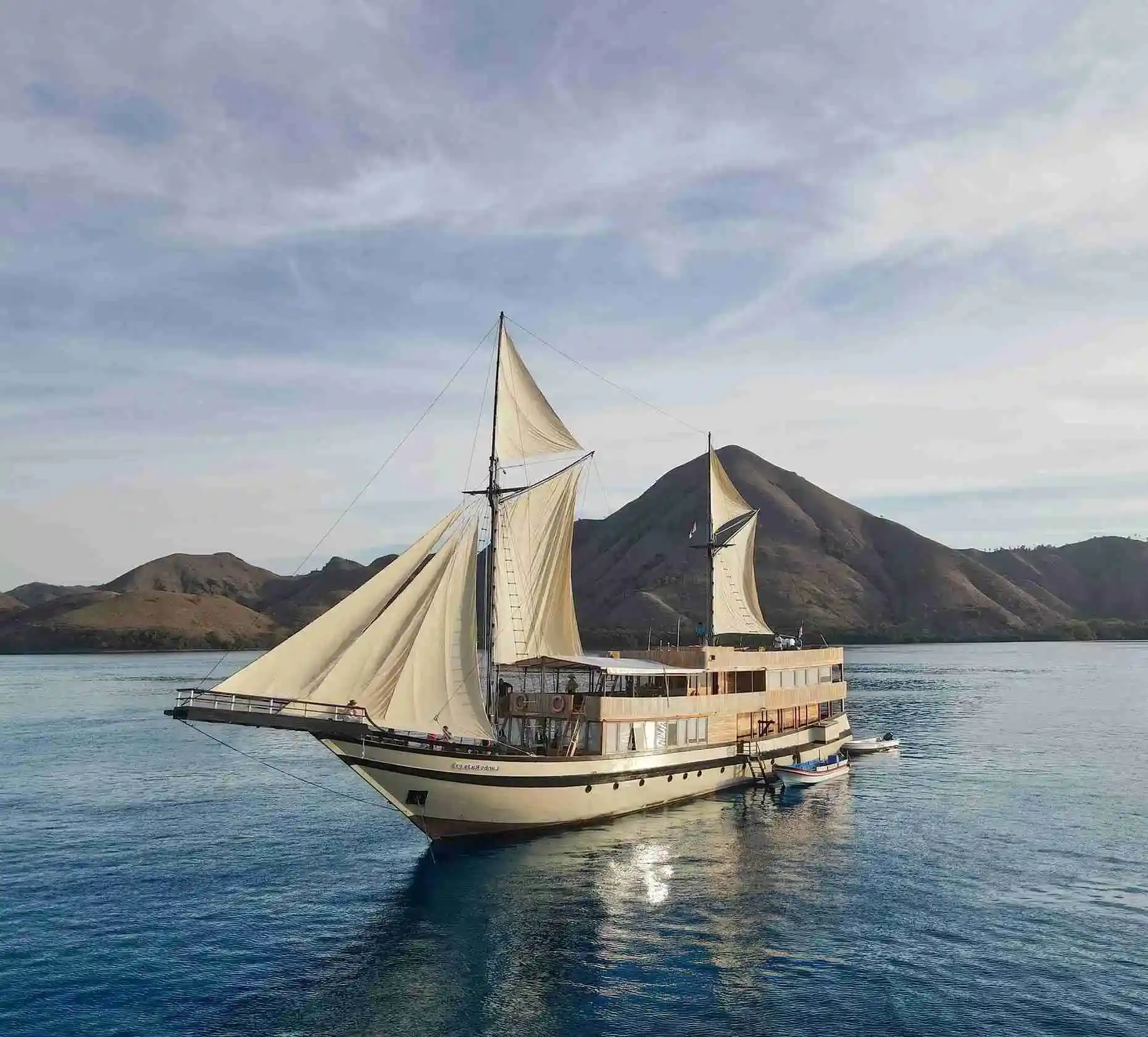
Then there is the fleet itself. The art of boatbuilding in South Sulawesi was inscribed as UNESCO Intangible Cultural Heritage in 2017, centered on Bulukumba Regency, where the Konjo boatbuilding community still raises wooden hulls of 30-50 meters and more by hand on the beaches of Tana Beru, Bira, and Lemo-Lemo. Because Indonesian cabotage rules favor Indonesian-flag vessels for domestic commercial work, the high-end charter phinisi fleet is largely built in-country and flagged locally — a structural reason owners commission with Indonesian yards rather than import. That is the economic base behind phinisi yacht construction and the liveaboard phinisi charter market.
The money already moves. On typical published broker ranges, boutique phinisi of 30-45 meters run about US$35,000-80,000 per week in high season, luxury vessels of 40-65 meters about US$80,000-150,000, and ultra or expedition builds US$150,000-250,000 and up — plus expenses, APA, and park fees. Monaco has nothing resembling Komodo’s dragons or the Dampier Strait, and the charter product here reflects that.
The verdict — and what would have to change
Bali is not the Monaco of Asia in 2026, and saying otherwise does owners no favors. The label would require roughly five things to land:
- Berth capacity at scale. Kura Kura Marina’s reported ~146 yachts is a serious start, but Monaco’s two ports hold roughly 700 berths. The phased build-out needs to complete and prove itself in operation.
- A resident service cluster. Brokers, managers, surveyors, refit capacity, and crew infrastructure concentrated in one place — the work our Bali yacht agency desk currently stitches together across a dispersed map.
- A flagship event with genuine international pull, which does not yet exist in Bali.
- Regulatory predictability. CAIT pre-clearance was abolished in the mid-2010s in favor of clearance at designated entry ports; Perpres 105/2015 relaxed cabotage for visiting yachts; foreign-flag private yachts cruise under temporary admission. Permanent import still carries class-dependent duties around 10 percent plus VAT and possible luxury tax, and commercial charter requires a licensed Indonesian entity. Information, not legal or financial advice — verify with licensed agents.
- Fiscal gravity. The Indonesia Financial Center direction for the Kura Kura SEZ, including the reported family-office scheme, is the first policy move that rhymes with Monaco’s actual advantage. Whether it materializes as legislation is the single biggest variable.
Our working view: Indonesia’s realistic play is not to copy Monaco but to become the place Monaco cannot be — the home port for the world’s most distinctive charter grounds, with Kura Kura Marina as the fixed address the industry has lacked. If the IFC designation lands with substance, the comparison gets more interesting quickly.
This is an independent information and yacht-services platform. We are not affiliated with the Kura Kura Bali development, BTID, or the marina operator. We monitor the project’s reported milestones and, through our group’s operating brands, arrange charter, construction, and shore services today — see yacht charter in Komodo for where the season is now.
FAQ
Is Bali officially the “Monaco of Asia”?
No. The phrase is a marketing analogy, not an established industry classification. Measured against Monaco’s pillars — roughly 700 berths, the Monaco Yacht Show, a fiscal regime, and a dense service cluster — Bali is at an earlier stage, with its first purpose-designed yacht marina still under construction.
How big will Kura Kura Marina be?
Reported capacity is around 146 yachts inside the 498-hectare Kura Kura Bali SEZ on Serangan Island. Main works have been underway since April 2025, with underwater infrastructure reported across 2025-2026 and a phased opening from 2026 onward. No single confirmed opening date has been published.
What does Monaco have that Bali lacks most?
Concentration. Monaco puts berths, brokers, managers, insurers, and the world’s leading superyacht show within a few hundred meters of each other. Indonesia’s capabilities exist but sit spread across Bali, Batam, Sulawesi, and Flores.
Can a foreign-flag yacht cruise Indonesia today?
Yes. Foreign private yachts clear in at designated entry ports and cruise under temporary admission; Perpres 105/2015 relaxed cabotage for visiting yachts. Commercial charter requires a licensed Indonesian entity. Information, not legal advice — verify with licensed agents.
What does a crewed phinisi charter cost?
On typical published broker ranges: about US$35,000-80,000 per week for boutique 30-45 m phinisi in high season, US$80,000-150,000 for luxury 40-65 m vessels, and US$150,000-250,000+ for ultra or expedition builds, plus expenses, APA, and park fees. Komodo runs May-September; Raja Ampat runs October-April.
Talk to our yacht desk
Whether Bali earns the Monaco comparison or writes its own, the cruising grounds are open now — and we work them daily. One WhatsApp thread covers charter, construction, transfers and everything in between.