
Phinisi UNESCO Heritage: Bulukumba’s Hand-Built Yachts
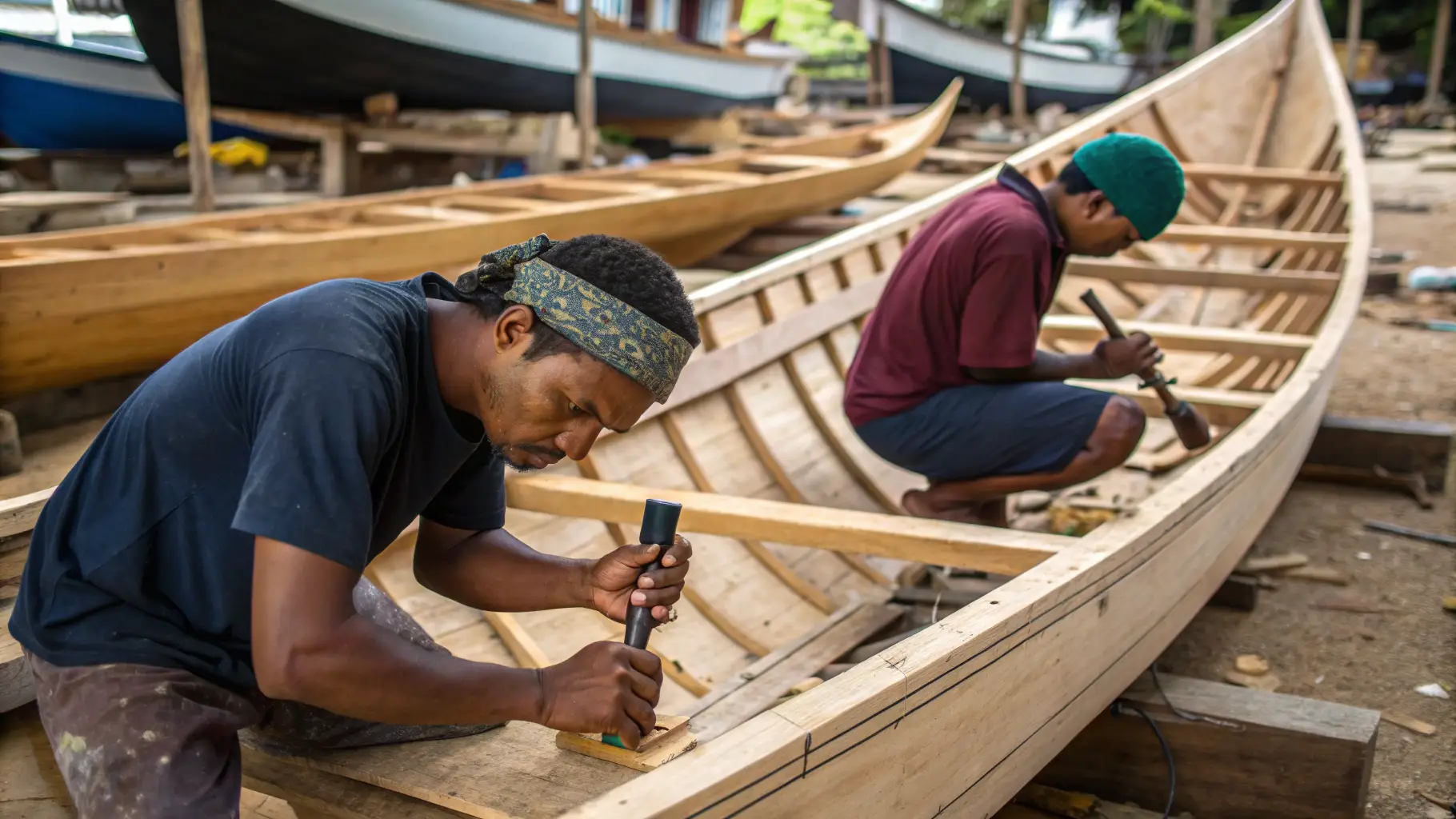
Phinisi UNESCO heritage status dates to 2017, when the “Art of boatbuilding in South Sulawesi” was inscribed on UNESCO’s Intangible Cultural Heritage list. The listing recognizes the Konjo builders of Bulukumba Regency, who still raise wooden hulls of 30 to 50 meters and more by hand on open beaches — and whose craft now carries much of Indonesia’s luxury charter fleet.
For owners, captains, and charterers, that inscription is worth understanding properly. It explains why the finest expedition yachts in Komodo and Raja Ampat are wooden, Indonesian-flagged, and built on sand rather than in a European shed — and why commissioning one is as much a cultural decision as a commercial one.
What the Phinisi UNESCO Heritage Inscription Actually Covers
The 2017 inscription does not protect a boat. It protects a body of knowledge: the art of boatbuilding as practiced in South Sulawesi, held by the Konjo boatbuilding community of Bulukumba Regency at the province’s southern tip. UNESCO’s intangible heritage list exists for living traditions — skills carried in hands and memory, passed from master builders to the next generation on the job, not archived in drawings.
That distinction matters for anyone assessing the modern charter fleet. A phinisi is not a replica of a historical vessel type frozen in 2017. It is the current output of an unbroken working tradition that has adapted its hulls to cargo, then to diving, then to luxury charter, without surrendering the method. The inscription certifies the process, and the process is still in daily use.
Tana Beru, Bira, and Lemo-Lemo: Shipyards Without Sheds
The building beaches of Bulukumba — Tana Beru, Bira, and Lemo-Lemo — function as open-air shipyards. There are no travel lifts and no covered halls. Keels are laid on the sand above the tide line, frames and planking go up in the open, and hulls of 30 to 50 meters and beyond are raised by hand, crew by crew, timber by timber. Visitors who expect a boutique atelier find something closer to a working waterfront: raw hulls at every stage, standing in a row against the sea.
The labor is organized around master builders whose authority rests on decades at the keel. Measurements travel through experience and proportion rather than through a naval architect’s software alone, although serious modern builds now pair the traditional team with contemporary engineering, classification input, and marine systems design. The result, when it is done well, is a hull with heritage geometry and modern reliability — the combination that made the type viable for high-end charter in the first place.
Ulin, Bitti, and the Discipline of Timber
Material selection is part of the inherited knowledge. Bulukumba builders work with dense tropical hardwoods — Ulin ironwood and Bitti among the traditional choices — selected for strength and behavior in seawater. Sourcing, seasoning, and placing each species where it serves best is a discipline of its own, and it is one reason a properly built and properly maintained wooden hull remains a serious long-term platform rather than a romantic liability.
Buyers evaluating a new build or a brokerage listing should ask the timber questions early: which species, from where, seasoned how long, and surveyed by whom. Honest yards answer in specifics. Our group works to that standard across its construction brands, and the same scrutiny applies when we assess vessels listed on the pre-owned market for clients.
How Phinisi UNESCO Heritage Hulls Became the Charter Backbone
The commercial logic is regulatory as much as romantic. Indonesia’s cabotage framework favors Indonesian-flagged vessels for commercial work in domestic waters, and running charters inside Indonesia requires an Indonesian entity — typically a PT PMA — with the appropriate licenses. Foreign-flagged private yachts cruise under temporary admission, but they cannot simply sell charters here. This is information, not legal or financial advice; verify current requirements with licensed agents before structuring anything.
Put those rules next to the Bulukumba tradition and the outcome is obvious: the high-end charter fleet was always going to be locally built and Indonesian-flagged. The phinisi was the platform waiting for the market. Over recent years, builders and operators have refined the type into full-beam owner’s suites, dive decks, and crews trained to superyacht service standards, while the silhouette stayed recognizably Sulawesi.
Published broker ranges give a fair sense of where the market sits. Treat these as typical published ranges, not quotes:
| Segment | Typical length | Typical published weekly rate (high season) |
|---|---|---|
| Boutique phinisi | 30–45 m | ~US$35,000–80,000 |
| Luxury phinisi | 40–65 m | ~US$80,000–150,000 |
| Ultra / expedition class | Varies | US$150,000–250,000+ |
Expenses, APA, and marine park fees sit on top of the base rate. For itinerary-level detail, our desk covers Komodo charters and Raja Ampat charters separately, and the liveaboard phinisi charter page walks through vessel tiers and booking mechanics.
Seasons, Routes, and Why the Fleet Keeps Moving
The fleet follows the weather across the archipelago’s 17,508 officially named islands. Komodo and the Bali corridor run best from May through September; Raja Ampat takes over from October through April; and the serious operators reposition their vessels between the two windows rather than sitting idle. The classic eastern run threads Bali, Nusa Penida and Lembongan, Lombok and the Gilis, Sumbawa, and Komodo. In the far east, boats stage out of Sorong toward Waigeo, the Dampier Strait, Misool, and the Fam group.
For a charterer, the practical takeaway is simple: the boat you want may be a thousand miles from where you want it, so book the season, not just the vessel. For an owner, repositioning is a scheduling and revenue question that belongs in the management plan from day one.
Commissioning a Heritage Hull Today
A new phinisi is a multi-year commitment, from design conversations through beach construction, fit-out, sea trials, and certification. Our group has operated in Indonesian yachting since 2015 and arranges builds through its operating brands, with yard relationships in Bulukumba and Labuan Bajo covering hull construction, naval engineering, interiors, and delivery. The full picture — stages, timelines, and how supervision works when your hull is rising on a beach in Sulawesi — is on our phinisi yacht construction page.
Owners weighing the numbers should read the build decision alongside charter revenue potential, flag and entity structure, and management costs; our yacht investment overview frames those trade-offs. Rates for our own services are on request via WhatsApp.
FAQ
When did the phinisi tradition receive UNESCO recognition?
In 2017, when UNESCO inscribed the “Art of boatbuilding in South Sulawesi” on its Intangible Cultural Heritage list. The inscription covers the craft and its Konjo practitioners in Bulukumba Regency, not any individual vessel.
Where are phinisi actually built?
The heartland is Bulukumba Regency in South Sulawesi, on the beaches of Tana Beru, Bira, and Lemo-Lemo, where hulls are raised by hand in the open. Many vessels are then fitted out or finished elsewhere, including Labuan Bajo, closer to their eventual cruising grounds.
Why are luxury charter phinisi Indonesian-flagged?
Indonesia’s cabotage rules favor Indonesian-flagged vessels for commercial work in domestic waters, and running charters requires an Indonesian entity with the right licenses. Building locally and flagging locally is the clean path to a charter business. This is general information, not legal advice — verify with licensed agents.
How much does a phinisi charter cost?
Typical published broker ranges run from roughly US$35,000–80,000 per week for boutique 30–45 m vessels in high season, US$80,000–150,000 for the 40–65 m luxury tier, and US$150,000–250,000+ for ultra and expedition class — plus expenses, APA, and park fees.
Is a wooden hull a maintenance problem for an owner?
A well-built hull in dense hardwoods such as Ulin ironwood, maintained on a proper schedule by a competent management team, is a proven long-term platform — the working fleet in Komodo and Raja Ampat demonstrates it season after season. The risk sits in poor timber selection and neglected maintenance, not in wood itself.
Can a foreign national commission a phinisi?
Yes — foreign clients regularly commission builds through Indonesian yards, with ownership and operating structures set up to match how the vessel will be used. Structures vary by case; take advice from licensed professionals before committing capital.
Talk to our yacht desk
Whether you want a week aboard a heritage phinisi in Komodo or a hull of your own rising on the Tana Beru sand, start the conversation with our desk. One WhatsApp thread covers charter, construction, transfers and everything in between.