
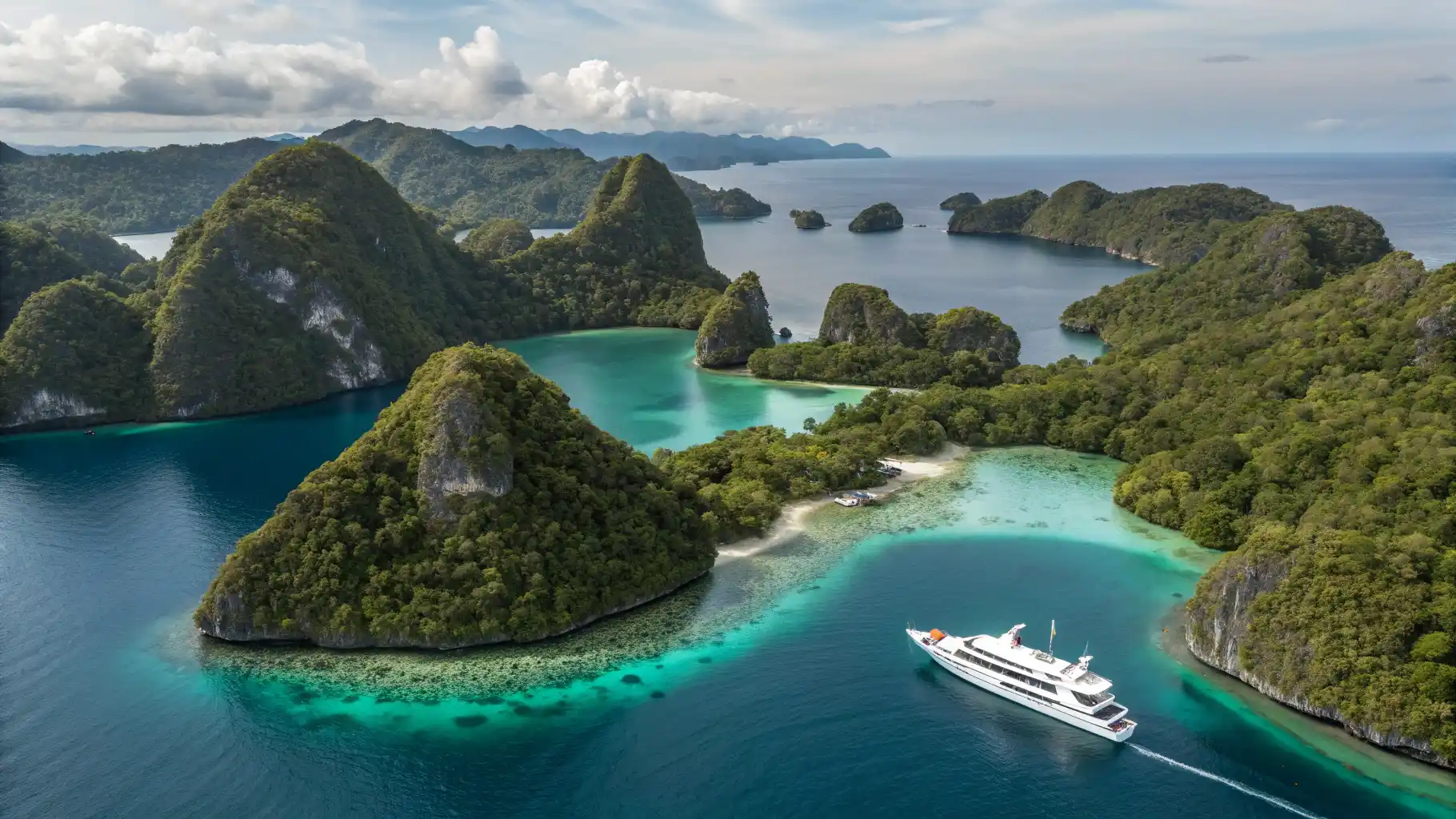
Sorong Yacht Clearance: The Raja Ampat Gateway Guide
Sorong yacht clearance is the standard route into Raja Ampat for foreign-flag yachts: complete entry formalities at this designated port on the western tip of Papua, appoint a local agent before arrival, then cruise the archipelago under temporary admission. Sorong is also the region’s logistics and air gateway — the last dependable stop for fuel, provisions, spares, and crew changes before the islands.
Why Sorong is the gateway to Raja Ampat
Raja Ampat has no purpose-built luxury marina. What it has instead is one of the richest reef systems on the planet, a network of marine protected areas, and a working port city sitting at its entrance. Clearance, bunkering, provisioning, air access, and agency support all concentrate in Sorong; the islands themselves offer anchorages, moorings in places, and very little shoreside infrastructure.
Captains who plan around that division of labor have easy trips. The islands are for cruising. Sorong is for everything else. Treat the city as your operations base — the place where paperwork closes, tanks fill, and guests arrive — and the passage out toward the Dampier Strait becomes the start of the cruise rather than a logistics scramble.
Sorong yacht clearance, step by step
Indonesia abolished the old CAIT pre-clearance system in the mid-2010s. There is no cruising permit to secure months in advance; instead, yachts clear in at designated entry ports, and Sorong serves that function for the Raja Ampat archipelago. Presidential Regulation 105/2015 also relaxed cabotage restrictions for foreign cruise vessels and yachts, which is what opened this corner of Indonesia to visiting flags in practical terms.
Foreign-flag private yachts cruise Indonesian waters under temporary admission. The working sequence for a Sorong entry looks like this: appoint a local agent one to two weeks before arrival, send vessel registration, insurance, crew and guest lists, and an outline itinerary, then present the vessel on arrival for customs, immigration, quarantine, and harbormaster formalities. A competent agent compresses this into a day; arriving without one stretches it considerably.
What your agent actually handles
Beyond the entry stamp, Sorong agents coordinate marine park fee payments, fuel barges or truck deliveries, fresh provisioning, waste disposal, crew visas and changeovers, and outbound clearance when you leave for Komodo, Bali, or an international departure. In a port with no marina office, the agent is the marina office.
Regulatory detail changes, and enforcement practice varies by port and season. Treat this section as information, not legal or financial advice — verify current requirements with licensed agents and professionals before you commit an itinerary.
Logistics: air links, fuel, and provisioning
Sorong is the air gateway for the whole region, with domestic connections that make guest rotations and crew changes workable mid-charter. Most owners fly guests to Sorong, board the same afternoon, and are anchored off Waigeo by the next morning. Spares and premium provisions typically route through Jakarta or Bali freight to Sorong; allow lead time, because the last leg is the slow one.
A quick reference for what the port can and cannot do:
| Need | How it works in Sorong |
|---|---|
| Entry and exit clearance | Designated entry port; customs, immigration, quarantine, harbormaster via your agent |
| Agency support | Established yacht agents; appoint before arrival, not after |
| Air access | Regional air gateway with domestic connections for crew and guest movements |
| Fuel and water | Arranged through agents by barge or truck; test and filter as standard practice |
| Provisioning | Local markets for fresh basics; premium items freighted in with lead time |
| Berthing | No purpose-built luxury marina; anchorage and agent-arranged alongside solutions |
The honest summary: Sorong is a logistics port, not a leisure destination. Provision generously, fuel carefully, and keep your expectations shoreside modest. The reward is on the other side of the strait.
Anchorage practice from Waigeo to Misool
The core cruising line runs Sorong to Waigeo, through the Dampier Strait, then south to Misool, with the Fam group as the signature detour. There are no berths anywhere on that route. Larger yachts anchor and run tenders; that is the settled operating pattern, and it works well with a crew that plans anchorages a day ahead.
Raja Ampat sits inside a network of marine protected areas, and anchoring discipline is both a legal and a reputational matter. Sound practice, which good local crews follow without being asked:
- Favor designated moorings where they exist, and check their condition before trusting them overnight.
- Anchor on sand patches well clear of reef structure; many walls drop fast, so scope planning matters.
- Respect the strong tidal flow through the Dampier Strait when timing passages and dive drops.
- Carry your marine park fee documentation aboard; patrols do check, and agents arrange the tags in Sorong.
- Brief tender drivers on reef zones and village etiquette; the villages are hosts, not scenery.
Seasons and fleet repositioning
Raja Ampat’s season runs October through April, when seas in the region are at their calmest and visibility is at its best. From May through September the weight of the Indonesian charter fleet works Komodo instead, and vessels reposition between the two grounds on the shoulder months. That rhythm matters for planning: book Raja Ampat dates early inside its season, and consider a Komodo charter if your window falls in the northern summer.
For charterers rather than owners, the repositioning cycle is also an opportunity — some operators price passage legs between Bali, Komodo, and Sorong differently from peak-season weeks. Ask; the answer varies by vessel and year.
How our yacht desk supports a Sorong call
We are an independent maritime information and yacht-services platform, and the services below are arranged and delivered through our group’s operating brands, active in Indonesian waters since 2015. Our Raja Ampat operation is based out of Sorong, which is exactly where you want a service partner to be.
For charterers, we arrange Raja Ampat yacht charters and liveaboard phinisi itineraries on Indonesian-flag vessels that already hold the licenses the archipelago requires. For visiting owners and captains, our yacht agency desk coordinates with Sorong agents on clearance, fuel, provisioning, and park fees, and our maritime security division covers vessels and principals where itineraries call for it. Rates for our services are on request via WhatsApp.
FAQ: Sorong and Raja Ampat by yacht
Do I still need a CAIT permit to bring my yacht into Indonesia?
No. The CAIT pre-clearance system was abolished in the mid-2010s. Foreign-flag yachts now clear in at designated entry ports such as Sorong and cruise under temporary admission. Requirements evolve, so confirm the current procedure with a licensed agent before arrival — this is information, not legal advice.
Is there a marina in Sorong or anywhere in Raja Ampat?
No purpose-built luxury marina exists in Sorong or the islands. Yachts use anchorages, moorings where provided, and agent-arranged alongside solutions in port. Larger yachts anchor and operate by tender throughout the archipelago; that is the standard and entirely workable pattern.
How long does Sorong yacht clearance take?
With an agent appointed in advance and documents sent ahead, entry formalities are commonly completed within a working day. Without an agent, expect delays across the customs, immigration, quarantine, and harbormaster sequence, and slower access to fuel and provisioning afterward.
What does a Raja Ampat phinisi charter cost?
Typical published ranges run about US$35,000–80,000 per week for boutique 30–45 m phinisi, US$80,000–150,000 for luxury 40–65 m vessels, and US$150,000–250,000+ for ultra and expedition tiers, plus expenses, APA, and marine park fees. Exact pricing depends on vessel, season, and routing.
Can my foreign-flag yacht run paid charters in Raja Ampat?
Commercial charter inside Indonesia requires an Indonesian entity, typically a PT PMA, plus licensing, and cabotage rules favor Indonesian-flag vessels. This is the core reason high-end charter phinisi are locally built and Indonesian-flagged. Verify structures with licensed professionals; this is information, not legal advice.
When should I plan a Raja Ampat cruise?
October through April is the established season, with the calmest conditions and the strongest fleet availability. From May to September most vessels work Komodo instead, so off-season Raja Ampat options thin out considerably and weather windows demand more flexibility.
Talk to our yacht desk
Planning a Sorong entry or a Raja Ampat season? One WhatsApp thread covers charter, construction, transfers and everything in between.