
Buy Phinisi Indonesia: New Build vs Pre-Owned Guide
Every serious plan to buy phinisi Indonesia offers comes down to one fork: commission a new hull from a heritage yard in Sulawesi or Flores, or purchase a pre-owned vessel already in the water. A new build buys control and takes years; a pre-owned boat buys time and inherits someone else’s decisions. This guide weighs both routes the way a surveyor would — timber first, paperwork close behind.
Why this decision is unlike any fiberglass purchase
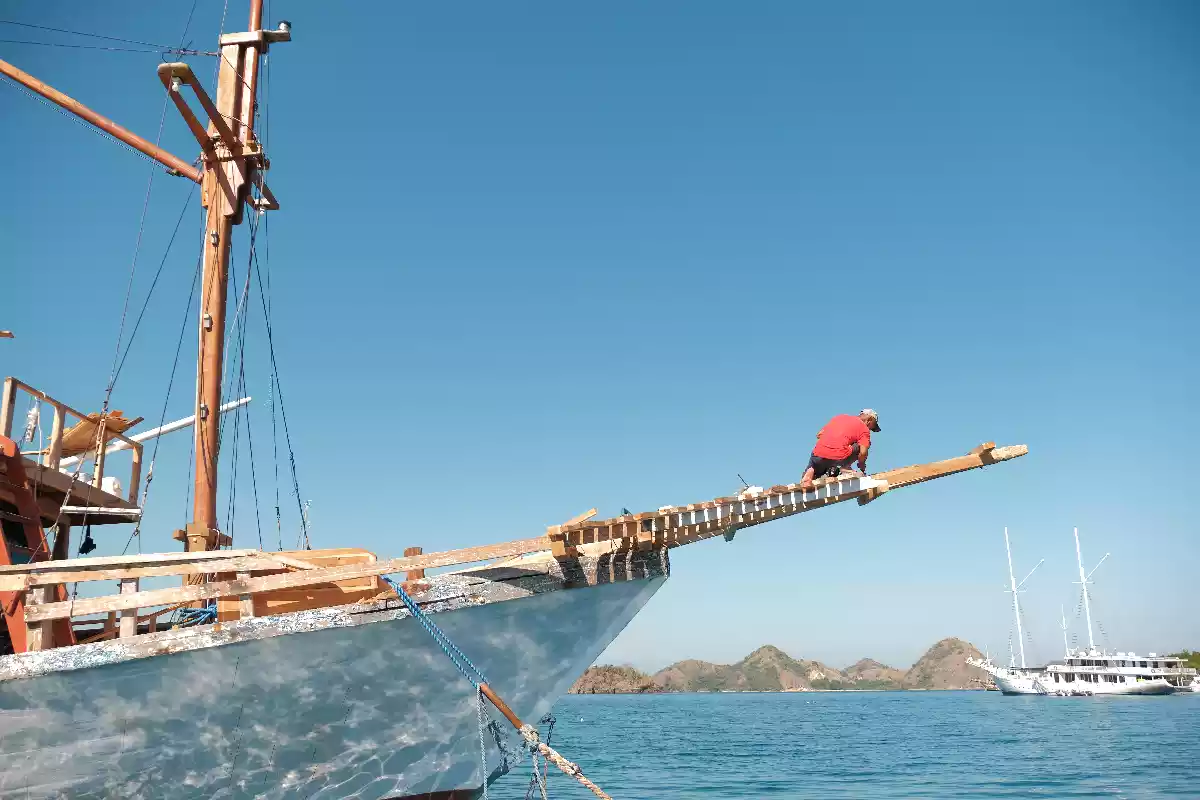
A phinisi is not a production yacht. South Sulawesi boatbuilding was inscribed by UNESCO as Intangible Cultural Heritage in 2017, and the trade still lives where it always has: on the beaches of Bulukumba Regency — Tana Beru, Bira, Lemo-Lemo — where the Konjo boatbuilding community raises wooden hulls of 30 to 50 meters and more by hand on open sand, no drydock in sight.
That heritage cuts both ways. No two hulls are identical, there is no class-series paper trail, and a vessel’s value rests on who built it, from what timber, and how it has been kept since launch. Either route means underwriting craftsmanship — hence this guide’s weight on supervision for new builds and survey discipline for pre-owned.
The case for a new build: control, heritage, the right flag
A commissioned hull is the only way to get exactly the boat you intend to operate. Cabin count, dive-deck layout, machinery specification, owner’s suite placement — every decision is yours before the first frame goes up, down to the details that decide whether a charter boat earns: cabin symmetry, compressor rooms, cold storage for ten-day remote itineraries.
There is also a structural reason the high end of the Indonesian charter fleet is locally built. Cabotage rules favor Indonesian-flag vessels for commercial work inside the archipelago, and running charters generally requires an Indonesian entity (a PT PMA) with the proper licenses. A hull built in-country and Indonesian-flagged from launch sits on the right side of that system — a core rationale for building locally rather than importing. Treat this as information, not legal advice; verify structures with licensed agents.
The honest cost of this route is time and attention. A phinisi build is a multi-year commitment, and the yard expects an engaged client: timber selection (Ulin ironwood below the waterline, Bitti frames is the classic pairing), fastener schedules, and fit-out sequencing all reward an owner’s representative who visits often. See our phinisi yacht construction desk for how supervision, milestone payments, and documentation are structured.
The case for pre-owned: speed, track record, inherited risk
A pre-owned phinisi can put you on the water in one season instead of several years. If the vessel has been chartering, you inherit more than a hull: a booking history, a trained crew, proven itineraries, and — critically — licenses and flag paperwork that already exist. For buyers chasing revenue this Komodo season, that speed is decisive.
The tradeoff: every decision you would have made at the yard was made by someone else, and some are buried under paint. Maintenance standards in the wooden fleet vary widely — two boats of the same length and age can be honest sisters on deck and a decade apart below the waterline. The listing price is the opening number; the survey tells you the real one. Our boat-for-sale desk lists new and pre-owned vessels, including VIP-class charter boats, with known history stated plainly.
The survey is the whole game on a wooden hull
On a fiberglass yacht, a survey confirms condition. On a wooden phinisi, it sets the price, the refit budget, and sometimes the decision itself. Insist on a haul-out and a surveyor with specific wooden-vessel experience. The checklist we hold buyers to:
- Keel, frames, and floors: moisture readings and probe checks for rot at the garboard, mast steps, and frame heels — the places water sits.
- Fastenings: corrosion and electrolysis around metal fasteners in tropical timber; sample-pull where the surveyor deems it justified.
- Caulking and planking: seam condition, sister-frame repairs, and any planking replaced with lesser timber than the original build.
- Marine borers: shipworm evidence below the waterline, especially on boats left idle at anchor.
- Machinery versus logbook: engine and generator hours reconciled against maintenance records, not the broker’s summary.
- Electrical and safety systems: rewiring quality after past refits, plus fire and life-saving equipment against charter requirements.
- Paper trail: build records, tonnage certificate, flag status, and any outstanding liens — verified, not assumed.
Findings feed straight into negotiation and the refit plan. Where work is needed, our refit and repair desk scopes it before closing, so the true acquisition cost is known while you can still walk away.
Build or buy phinisi Indonesia: the decision in one table
| Factor | New build | Pre-owned |
|---|---|---|
| Time to water | Multi-year project | Weeks to months post-survey |
| Design control | Total — every decision is yours | You adapt to the builder’s choices |
| Cost certainty | Contract-staged; scope changes add up | Price known; refit exposure unknown until survey |
| Flag and licensing | Indonesian-flag from launch | Inherited — an asset if clean, a project if not |
| Charter readiness | Earns nothing until launch | Can keep bookings and crew from day one |
| Risk profile | Execution: yard, timeline, supervision | Condition: everything the survey exists to find |
Flags, import duty, and charter licenses
The regulatory picture rewards the locally built, Indonesian-flag route for anyone with commercial intent. In broad strokes from published rules: foreign-flag private yachts cruise under temporary admission, cleared at designated entry ports since CAIT pre-clearance was abolished in the mid-2010s. Permanent import of a foreign vessel triggers duties (around 10 percent, class-dependent), VAT, and potentially luxury sales tax. Paid charters require an Indonesian company and licenses, and cabotage favors Indonesian-flag ships.
All of this is general information, not legal or financial advice — details move, and structuring mistakes are expensive. Verify your case with licensed agents and professionals before signing.
What the boat can earn, for context
Typical published broker ranges put boutique 30–45 m phinisi at roughly US$35,000–80,000 per week in high season, luxury 40–65 m vessels at US$80,000–150,000, and ultra or expedition boats at US$150,000–250,000-plus, before expenses, APA, and park fees. The fleet works two seasons — Komodo and Bali from May through September, underway now as of July 2026, and Raja Ampat from October through April — repositioning between them. Whether they justify a build contract or a purchase price is an underwriting exercise; our yacht investment desk walks owners through it without varnish.
How our desk works both sides of this decision
Our group has operated in Indonesian waters since 2015; both routes run through our own operating brands, not referral partners. New builds are delivered through construction teams in Bulukumba and Labuan Bajo — the same beaches and yards described above — with build cards, timber documentation, and staged supervision. Pre-owned purchases run through our boat services division: listings, survey coordination, negotiation, and refit scoping under one roof. After closing, the yacht management desk handles crew, maintenance cycles, and charter placement so the boat earns instead of sitting.
Rates for survey guidance, construction supervision, and management are on request via WhatsApp. We will say plainly when a listing is not worth surveying or a build brief does not fit its budget — that candor is cheaper than a bad hull.
FAQ
How long does a new phinisi build take?
Plan in years, not months. Timber sourcing, the hand-raised hull on the beach, launch, and fit-out afloat each take their own season. Owners needing revenue sooner often pair a pre-owned purchase with a build, letting the first boat earn while the second grows.
Can a foreigner own a phinisi in Indonesia?
Foreign-flag private yachts can cruise under temporary admission, while commercial charter generally requires an Indonesian entity (PT PMA), and cabotage favors the Indonesian flag. This is information, not legal advice — structure ownership with licensed agents.
What does a pre-owned phinisi survey cover?
Keel and frame probing, fastener condition, caulking and planking, marine borer evidence, machinery hours against logs, electrical systems, and the full paper trail — build records, tonnage, flag, and liens. Pricing depends on vessel size and haul-out logistics; rates on request.
Is a charter phinisi a sound investment?
It can be a working asset with seasonal revenue — typical published ranges run from US$35,000 to US$250,000-plus per week by class — but earnings depend on management quality, refit discipline, and positioning between Komodo and Raja Ampat seasons. Treat projections as underwriting, not promises, and take independent financial advice.
Where are the best phinisi built?
The heartland is Bulukumba Regency, South Sulawesi — the beaches of Tana Beru, Bira, and Lemo-Lemo, home of the Konjo boatbuilding community whose craft earned UNESCO Intangible Cultural Heritage status in 2017. Labuan Bajo in Flores is a second center, convenient for Komodo charter boats.
Talk to our yacht desk
Whether you commission a hull on a Bulukumba beach or shortlist a pre-owned phinisi for survey, we run both routes in-house. One WhatsApp thread covers charter, construction, transfers and everything in between.