
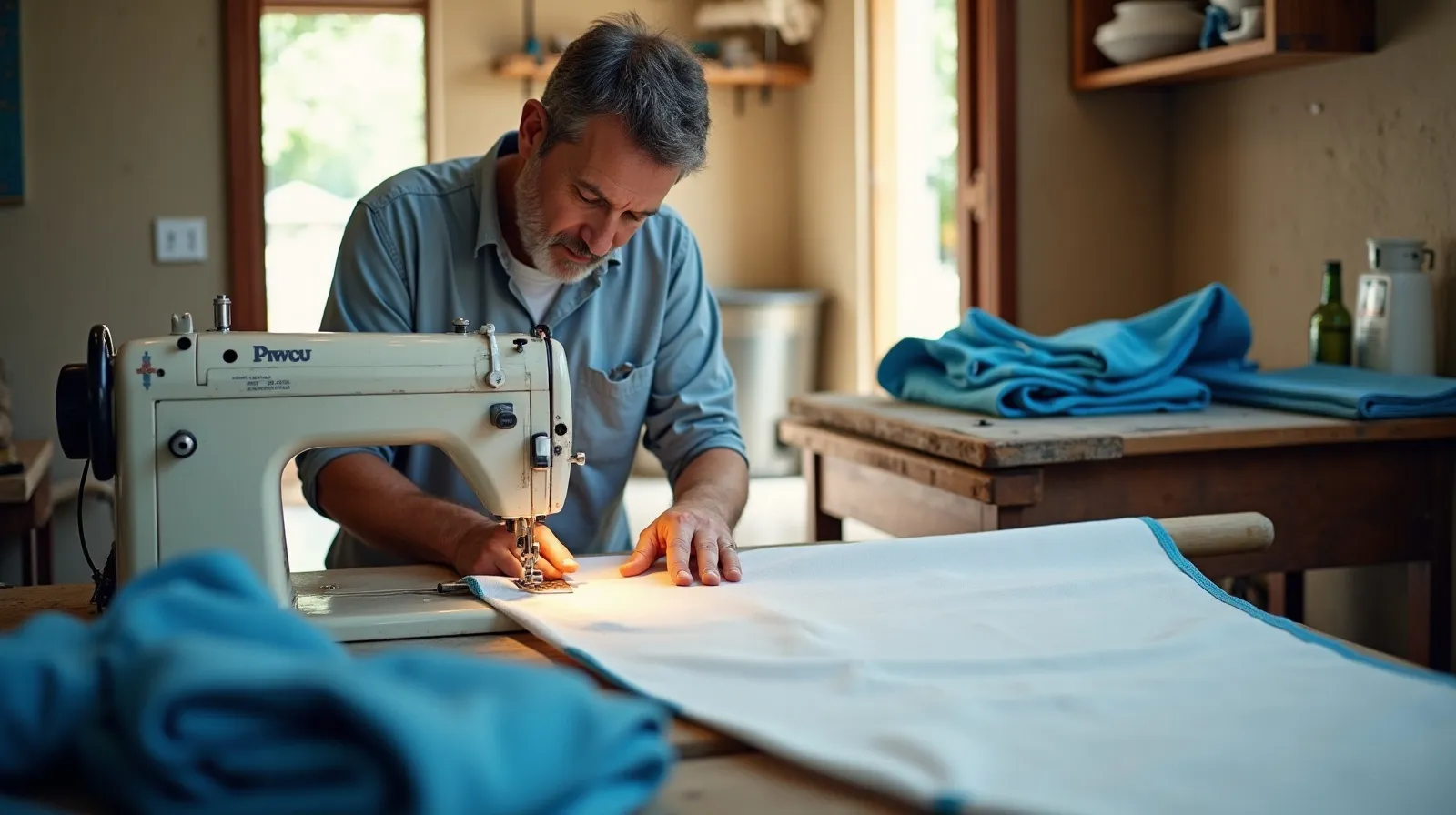
Sail Repair and Canvas Work Near Bali’s Marinas
Bali splits the soft-goods trade cleanly in two, and knowing the split saves a season. Canvas work — biminis, sprayhoods, awnings, covers, cushions and upholstery — is a genuine local strength: skilled trades, quick turnarounds, and pricing that makes Mediterranean crews double-check the quote. Sail work is honest but bounded: repairs, re-stitching, patching, hardware and UV strips are all handled competently around the Serangan–Benoa basin, while full sail construction and performance work belong with the major lofts elsewhere in Asia, with Bali as the shipping and fitting point. As of 2026 that is the whole picture in two sentences; the rest of this guide is how to use it well.
The standing note: kurakuramarina.com is an independent information and marine-services platform for the Serangan–Benoa yachting scene. We name trades by category rather than endorsing brands, we hold no exclusive arrangements, and scope and quotes for your boat come confirmed in USD in writing through the desk.
Why Canvas Is the Local Strength
Bali runs on sewn textile: the island’s garment and upholstery industries support deep benches of machinists, and the marine trades draw directly on them. Add a working waterfront that keeps charter boats, dive fleets and wooden phinisi in commission year-round, and you get canvas shops that understand boats, not just fabric. What that means in practice:
- Covers and awnings: measured aboard, templated, sewn and refitted typically inside a week — faster for straightforward jobs in the wet season when the trades are quieter.
- Biminis and sprayhoods: frame repairs through the stainless trade, new acrylic canvas to template, zips and clears replaced — a full sprayhood rebuild here often costs what a zip replacement invoices for in Palma.
- Cushions and interiors: upholstery is where Bali quietly excels; charter operators refresh entire deck cushion sets between seasons at prices that make replacement-versus-repair an easy decision.
- Materials honesty: genuine marine-grade acrylics, threads and foams are available but must be specified explicitly — ask what cloth and UV-rated thread the quote assumes, because the price difference between marine and general-purpose materials is real and worth paying.
The trades come to the boat by road — one of the standing advantages covered in our Serangan access guide — so measuring and fitting happen dockside rather than around a haul-out schedule.
What Sail Repair Here Handles Well
For working repairs, the basin’s sailmaking-adjacent trades cover the realistic cruising list: seam re-stitching before UV-weakened thread becomes a blown panel, patches and chafe reinforcement, batten pocket and slider repairs, luff tape replacement, UV strip renewal on furling headsails, and webbing and hardware work. Machines that handle heavy cloth exist in the canvas shops, and the phinisi fleet — whose sails and awnings are working equipment, maintained constantly — keeps those skills exercised; that heritage side of the trade is sketched in our phinisi construction overview.
The boundary is equally clear. Full sail construction, laminate and membrane work, recuts and performance optimisation are loft jobs, and the serious lofts sit in Hong Kong, Thailand, Sri Lanka and Australasia. The working pattern for a replacement sail is measurement aboard here, construction at the loft, air freight back, and fitting at the berth — with the shipment cleared as parts for a yacht in transit, the routing covered in our customs and stores guide. Allow three to eight weeks end to end depending on loft queue and freight, which is why the inspection habit below matters more than any supplier list.
Timing the Work
Two calendars govern soft goods here. The trade calendar: the dry season (April to October) is when every boat wants canvas touched, so lead times stretch; the wet season is when the same shops turn jobs in days — if the boat winters in Bali, schedule the full canvas refresh for the quiet months, a rhythm that pairs naturally with the long-stay patterns in our berthing calendar guide. The sun calendar: UV at these latitudes is the real destroyer of thread and cloth, so inspection intervals that work in temperate waters are too long here. The check our riggers teach: drag a fingernail across exposed stitching quarterly — if the thread parts, the re-stitch is already overdue, and a day of preventive seam work costs a fraction of any blown sail.
How Charter Fleets Manage It
The operators running boats hard through the season treat soft goods as scheduled maintenance, not repair. Sails and canvas are inspected at every turnaround, re-stitching happens the week thread starts dusting, and cover sets rotate so one is always in the shop while another is in service. Komodo Luxury’s sailing fleet runs this doctrine across its Komodo sailing itineraries, where a season of trade-wind miles and equatorial sun compresses a temperate decade of UV exposure into months. Private owners get the same result by putting soft goods on the work list every time the boat is alongside — the coordination pattern described in our berth-plus-repairs guide, with the wider trades directory at marine services.
Can I get sails repaired in Bali?
Yes, for the working repair list: re-stitching, patches, chafe reinforcement, batten pockets, luff tapes, UV strips and hardware. Full sail construction, laminate work and recuts go to the major Asian lofts, with measurement and fitting done at the berth in Bali and the sail air-freighted between — allow three to eight weeks end to end.
Is canvas work in Bali actually good?
It is the local strength. Bali’s textile trades support skilled marine canvas shops that template and fit dockside, and quality is high when marine-grade materials are specified explicitly. Ask what cloth and UV-rated thread the quote assumes — that single question separates a five-year job from a two-year one.
How much does yacht canvas work cost in Bali?
Labour rates sit well below Mediterranean and Australian levels, so made-to-measure covers, sprayhood rebuilds and full cushion sets cost a fraction of the equivalent invoice in Palma or Sydney; imported marine-grade materials narrow the gap somewhat. We confirm scope and price for your job in USD in writing rather than publish numbers that age.
When is the best time to schedule soft-goods work?
The wet season, November to March, when the trades are quiet and turnarounds drop to days — ideal for boats wintering in Bali. In the dry season, book ahead and expect queues. Year-round, quarterly stitching checks catch UV damage while it is still a repair rather than a replacement.
Talk to our yacht desk
Send photos of the sail or canvas job and your dates, and we scope it with the right trade, confirm price and turnaround in USD in writing, and manage the work dockside on one WhatsApp thread.