
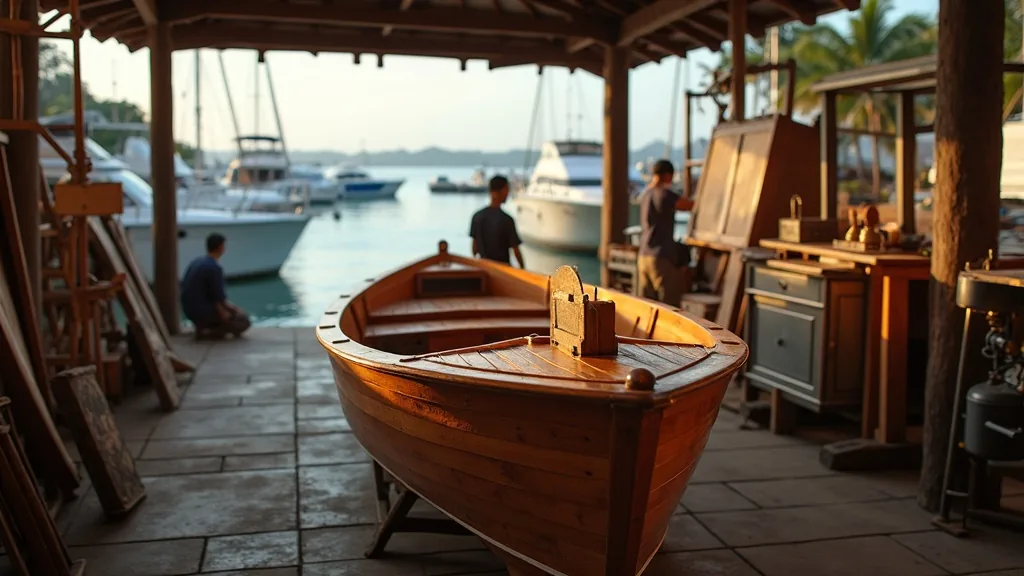
Wooden Boat Building Cost in Bali & Indonesia 2026
As of 2026, wooden boat building cost in Bali and Indonesia runs from roughly USD 4,000 per meter for a traditional hull-only build to USD 45,000 or more per meter for a fully fitted luxury charter phinisi. In practical terms, a 30-meter sailing-ready wooden yacht typically lands between USD 500,000 and USD 1.2 million, while charter-grade luxury builds generally start around USD 1.5 million and can exceed USD 5 million at the top end. The final number is driven by three decisions above all: your timber, your fit-out tier, and the yard that builds the hull.
This guide breaks down the full cost anatomy — price per meter, timber choices, labor, timeline, and fit-out — based on how builds are actually structured between the traditional yards of Bulukumba, South Sulawesi, and the finishing and delivery hub of Bali. All figures are indicative planning brackets, not quotations; real quotes vary with specification, timber market conditions, and exchange rates. For a detailed scope of what a managed build includes, see our phinisi yacht construction page.
How Much Does a Wooden Boat Cost Per Meter in Indonesia?
Wooden boat building in Indonesia is usually quoted per meter of length overall (LOA), because hull volume, timber consumption, and labor hours all scale with length. Per 2026, these are the working brackets we use for early-stage budgeting:
| Build tier | Typical LOA | Indicative cost per meter | Indicative total | Timeline |
|---|---|---|---|---|
| Hull structure only (traditional build) | 18–30 m | USD 4,000–8,000 | USD 90,000–250,000 | 10–16 months |
| Sailing-ready, basic fit-out (private / dive) | 22–32 m | USD 12,000–20,000 | USD 300,000–650,000 | 16–24 months |
| Charter-grade comfort | 28–40 m | USD 20,000–32,000 | USD 650,000–1.5M | 20–30 months |
| Luxury charter phinisi | 32–55 m | USD 30,000–45,000+ | USD 1.5M–5M+ | 24–36 months |
Two things distort naive per-meter math. First, beam and depth grow with length, so a 40-meter hull consumes far more than twice the timber of a 20-meter hull. Second, the interior is where budgets diverge: two hulls of identical length can differ by USD 2 million purely on fit-out. Treat the hull as the foundation cost and the fit-out tier as the real budget decision.
What Drives Wooden Boat Building Cost in Bali and Indonesia?
Four factors account for most of the variance in wooden boat building cost in Bali and across the archipelago:
- Timber selection — teak, ironwood, and bitti carry very different prices and availability, and timber is typically 25–40% of a hull-only budget.
- Labor and yard location — hulls are overwhelmingly built in Bulukumba, where master-builder labor rates are a fraction of European yard rates; finishing in Bali adds cost but also access to marine trades and surveyors.
- Fit-out tier — plumbing, electrical, air conditioning, joinery, and guest cabins are where a boat becomes a yacht.
- Systems and rigging — engines, generators, watermakers, navigation electronics, and standing rigging are largely imported and priced in USD, so they do not benefit from Indonesia’s low labor costs.
Teak, Ironwood, or Bitti: Which Timber Should You Choose?
Traditional Sulawesi builders combine timbers by function rather than using one species throughout:
- Ironwood (ulin) — extremely dense Kalimantan hardwood used for keels and lower structure. Outstanding rot and borer resistance, but heavy, increasingly scarce, and priced accordingly. Expect ironwood-intensive builds to sit at the top of the hull bracket.
- Teak (jati) — the classic choice for planking, decks, and brightwork. Naturally oily, dimensionally stable, and repairable anywhere in the world. Plantation teak from Java and Sulawesi is the norm in 2026; old-growth stock commands a significant premium when available.
- Bitti (Vitex cofassus) — the traditional frame timber of Bulukumba’s builders, strong and locally sourced. A bitti-framed, teak-planked, ironwood-keeled hull is the classic phinisi recipe and usually the best value-to-longevity ratio.
A practical rule: going from a mixed-timber hull to a heavily teak or ironwood specification typically adds 15–30% to the hull budget. That premium buys longevity and resale value, so for charter boats intended to work for 20+ years, it is often money well spent.
Why Are Hulls Built in Bulukumba and Finished in Bali?
The village yards around Ara and Tanjung Bira in Bulukumba, South Sulawesi, have built wooden ships for generations — the phinisi shipbuilding tradition there was inscribed by UNESCO as intangible cultural heritage in 2017. A master builder (punggawa) leads a crew of 10–20 craftsmen who shape the hull largely by eye and inherited proportion, at labor rates that make Indonesian builds structurally cheaper than any comparable wooden build in Europe or Australia.
Bali’s role comes after launch. Engines, electrical systems, interiors, rigging, and surveys are commonly completed or refined in Bali, where imported systems, skilled marine trades, and classification surveyors are accessible. The delivery sail from Bulukumba to Bali takes only a few days, and Benoa and Serangan serve as the island’s main yacht gateways — with additional berthing capacity planned in phases as the Kura Kura Bali marina development on Serangan progresses. (For clarity: this site is an independent information and marine-services resource, not the official site of any marina developer.) Our marine services team handles exactly this finishing, survey, and delivery stage.
How Long Does a Custom Wooden Boat Build Take?
Realistic timelines per 2026, assuming timber is secured early:
- Months 0–3: design, specification, contract, and timber procurement — the single most schedule-critical step, since keel and frame timbers must be sourced and seasoned.
- Months 3–14: keel laying, framing, and planking in Bulukumba.
- Months 12–20: decking, superstructure, engine installation, launch.
- Months 18–30+: fit-out, rigging, systems commissioning, sea trials, and survey — often completed in Bali.
Budget contingency in time as well as money: weather, timber delivery, and change orders routinely add 10–20% to schedules. A promised 12-month luxury build is a red flag, not a bargain.
Fit-Out Tiers: Where the Budget Really Goes
Fit-out is best understood in three tiers. A basic tier (private cruising or dive operations) covers simple cabins, manual systems, and workboat-grade finishes. A charter-comfort tier adds en-suite guest cabins, air conditioning, a proper galley, watermaker, and generator redundancy — the minimum for commercial charter in the Komodo and Raja Ampat markets. A luxury tier means designer interiors, premium joinery, large tenders, dive compressors, stabilization, and hotel-grade systems. Moving up one tier typically raises the total project cost by 60–100%, which is why we advise clients to fix the fit-out tier before falling in love with a hull length. The phinisi construction page details what each tier includes in a managed build.
Hidden Costs Most First-Time Owners Miss
- Main engine and generators — commonly USD 60,000–200,000+ installed, depending on size and brand.
- Rigging and sails — a full phinisi rig with sails can run USD 40,000–150,000.
- Surveys, flagging, and certification — budget for independent survey during construction, not just at handover; regulatory costs vary by flag and intended use, so verify current requirements at the time of your build rather than relying on fixed figures.
- Delivery and berthing — delivery crew, insurance, and a berth or mooring plan in Bali once the boat arrives.
- Owner’s representation — independent build supervision typically costs 5–10% of project value and reliably pays for itself in avoided rework.
Planning a Build? Start With Real Numbers
Wooden boat building cost in Bali and Indonesia ultimately comes down to three early decisions: timber specification, fit-out tier, and who supervises the yard. Get those three right and Indonesian builds offer arguably the best value in the world for a large wooden yacht; get them wrong and the “cheap” build becomes expensive twice over.
Our team manages phinisi and wooden boat construction end to end — Bulukumba yard selection, timber procurement, build supervision, Bali-side fit-out, survey, and delivery. Part of Juara Holding Group, operating from Bali across Indonesia since 2015. For an indicative budget on your specification, contact us on WhatsApp at +62 811-3941-4563 or email bd@juaraholding.com — a realistic bracket for your project usually takes one conversation.