Yacht Video Production: Inside a Fleet Film Day in Bali
A professional yacht video production day in Indonesian waters runs to a fixed sequence: interiors at dawn while the light is soft, running shots and drone passes through mid-morning, guest-experience scenes in the early afternoon, and hull-level golden-hour passages before the sun drops. One disciplined day, planned like a short coastal passage, delivers a fleet film, a listing gallery, and a season of social cuts.
What follows is the anatomy of that day as our desk runs it, delivered through Juara Production, our group’s media arm, for charter phinisi, motor yachts, and expedition vessels working between Bali, Komodo, and Raja Ampat. The vessels described here are generic composites. The sequence is not.
The call sheet: planning yacht video production like a passage
A film day is scheduled the way a captain plans a coastal hop, and for the same reason: the variables that matter are set by the sea, not the crew. The producer fixes the weather window first, then works backward. Sun azimuth is checked against the anchorage orientation so the vessel’s best side faces the light at the hours that count. Sea state matters twice over, once for how the hull sits on camera and once for whether the chase boat can hold a stable platform at speed.
The call sheet that results reads more like a sailing plan than a film document. It lists the anchorage, the running headings for each pass, tide at the boarding pier, chase boat allocation, drone launch and recovery points, and a crew briefing held the evening before: which decks stay clear, when the generator can run without spoiling audio, and who handles fenders and lines during the passes.
Dawn: interiors before the heat
Interiors are shot first, and the reason is practical rather than artistic. At first light the boat is cool, the crew is fresh, air conditioning has run all night so surfaces are dry, and low sun through ports and skylights gives cabins a depth that midday light flattens completely. By 10:00 in the tropics, every interior frame fights heat shimmer at the windows and a crew that has already worked four hours.
The styling pass
Before a single frame is recorded, a styling pass moves through the vessel: linens pressed and squared, charts and clutter cleared from the saloon, engine-room signage straightened, tender covers either fitted properly or removed. Nothing is staged that the boat cannot reproduce for a real guest. A listing film that promises more than the vessel delivers costs the operator its first review.
Cabin order
The master cabin goes first, while patience and light are both at their best. Guest cabins follow, then the saloon and dining areas, then galley and crew spaces if the brief calls for them. Brokerage films for a sale listing usually do want the technical spaces; charter films rarely do.
Mid-morning: running shots and drone passes
By 08:30 the vessel is under way and the chase boat takes over. Running shots are choreographed on the radio: the captain holds a steady heading and speed while the chase boat works parallel tracks, crossing astern to change sides rather than cutting the bow. On a phinisi, this is the slot where sails are set, because mid-morning breeze is usually the most reliable of the day.
Drone work slots into the same window. Launch and recovery happen from the chase boat, not the subject vessel, so the deck stays clean in every frame. Altitudes and distances are briefed in advance with the captain, and local drone regulations apply everywhere in Indonesian airspace, with additional restrictions near airports and inside conservation areas such as Komodo National Park. Operators should treat permissions as a planning item, not an on-the-day question. That is information, not legal advice; verify current rules with licensed local agents before the shoot.
When a helicopter earns its slot
For most single-vessel shoots, a capable drone team covers the aerial brief. A helicopter earns its cost in three situations: long high-speed tracking shots that outrun drone endurance, multiple vessels running in formation for a fleet film, and door-off stills work where a photographer needs to direct the pilot in real time. Around Bali and the islands east of it, helicopter charter can be arranged through our group’s operating brands, with the aviation and marine schedules coordinated by one desk so the vessel is not holding station burning fuel while waiting on an aircraft.
Golden hour: the passages that sell the vessel
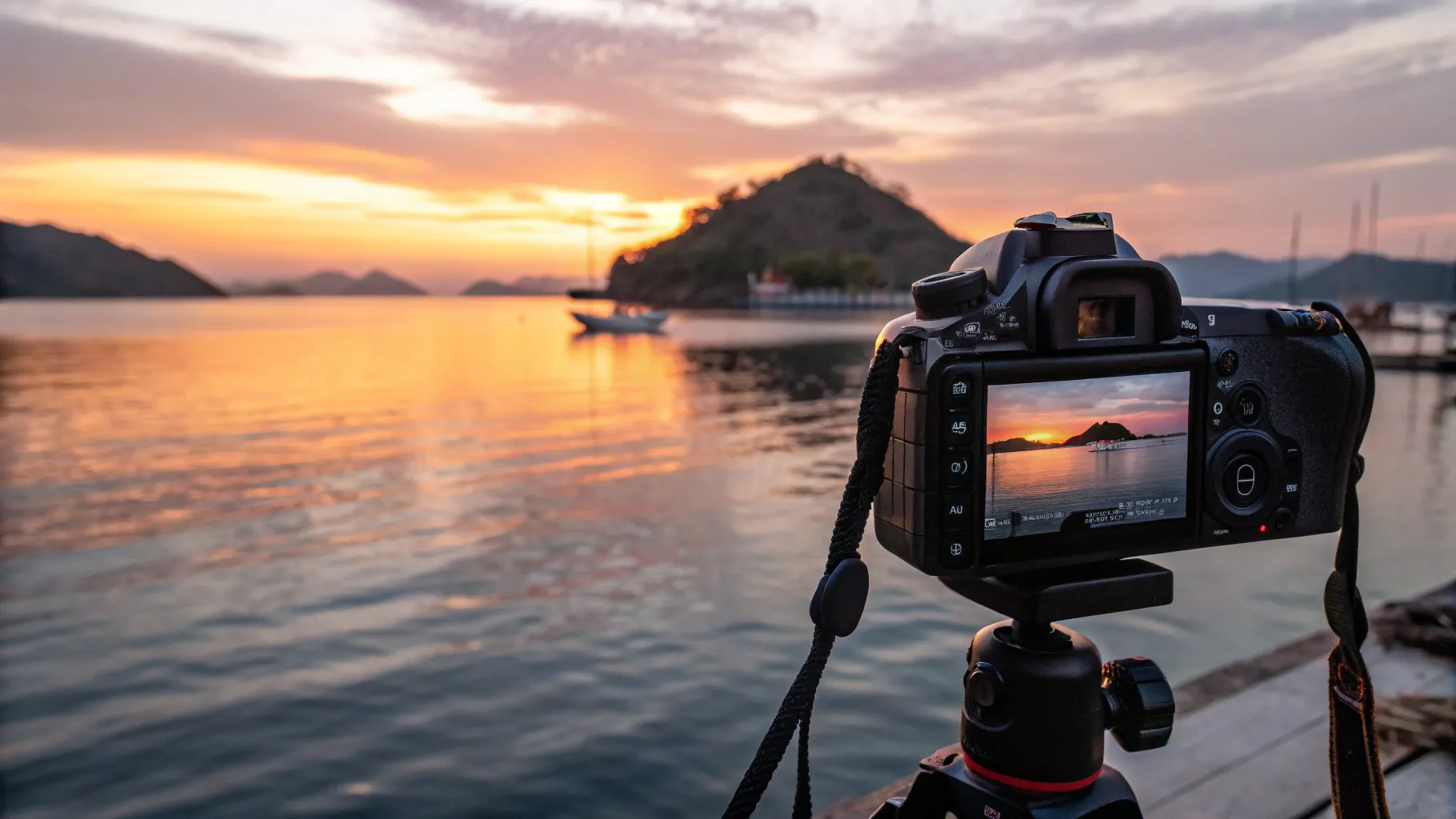
The last ninety minutes of light are protected on every call sheet, because this is where the signature material comes from. The vessel runs its best passes again, bow quarter to the low sun, and the same maneuvers that looked competent at noon look cinematic at 17:45. As the sun drops, the sequence shifts to anchor-down scenes: deck lights coming on at blue hour, the tender returning, dinner service being laid on the aft deck. These closing frames do more selling than any specification sheet, because they show the hour a charter guest is actually buying.
The edit: from cards to listing assets
The day ends with an ingest routine that would satisfy any engineer: every card backed up twice before anyone eats. The edit that follows turns roughly a terabyte of material into a working asset kit. This is where yacht video production either pays for itself or does not, because raw footage has no commercial value until it is cut to the formats that brokers, charter platforms, and social channels actually use.
| Deliverable | Typical use |
|---|---|
| Fleet or vessel film, 60–90 seconds | Website hero, broker presentations, charter shows |
| Full stills gallery, cabin by cabin | Charter listings and sale listings |
| Vertical cuts, 15–30 seconds | Social channels, paid campaigns |
| Silent loops and aerial plates | Website backgrounds, event screens |
| Raw selects archive | Future re-edits without a second shoot day |
A vessel positioned for Komodo charter work typically wants the film cut around the itinerary as much as the boat: passage scenes, dive tenders, the anchorages guests will recognize from their research. The full scope of what our group produces, from single-vessel films to complete liveaboard listing packages, is set out on our yacht media production page.
What the captain and crew prepare
The production team brings cameras; the vessel decides whether the day succeeds. Captains who run good media days treat them as an operation: fuel and tender plans confirmed the day before, crew in clean uniform from first light, decks washed at dawn rather than during the shoot, and loose gear stowed as if an owner were aboard. Owners who keep their vessel permanently guest-ready through a management or owner concierge arrangement start the day two hours ahead of everyone else.
One honest note from the desk: a media day cannot fix a tired boat. If the brightwork is due and the cushions are sun-flattened, spend on the refit first and film second. The camera is loyal to the truth.
FAQ
How long does a fleet film day actually take?
A single-vessel day runs from roughly 05:00 to 19:00 on the water, with a styling and briefing session the evening before. Multi-vessel fleet films usually need two to three days, since each vessel still needs its own interior and golden-hour slots.
Do drone flights over Indonesian waters need permits?
Drone operations in Indonesia are regulated, and additional restrictions apply near airports and inside conservation areas such as Komodo National Park. Requirements vary by location and aircraft class. This is information, not legal advice; confirm current permissions through licensed local agents or your production team before the shoot day.
Can one day cover both charter marketing and a sale listing?
Usually yes, if it is planned that way from the start. A sale listing needs technical spaces, machinery, and honest condition coverage that a charter film skips. Flag both purposes on the brief and the call sheet absorbs the extra hour of interiors.
What does a yacht shoot cost?
Scope drives it: vessel size, location, drone versus helicopter aerials, and the deliverable list. For work arranged through our group, rates are on request via WhatsApp, with a written scope before any day is booked.
When is the best season to film in Komodo or Raja Ampat?
Follow the charter seasons: Komodo and the islands between Bali and Flores film best from May through September, while Raja Ampat’s calm window runs roughly October through April. Shooting in season also means the film shows the conditions guests will actually get.
Talk to our yacht desk
Planning a fleet film, listing shoot, or full media package for your vessel? One WhatsApp thread covers charter, construction, transfers and everything in between.