
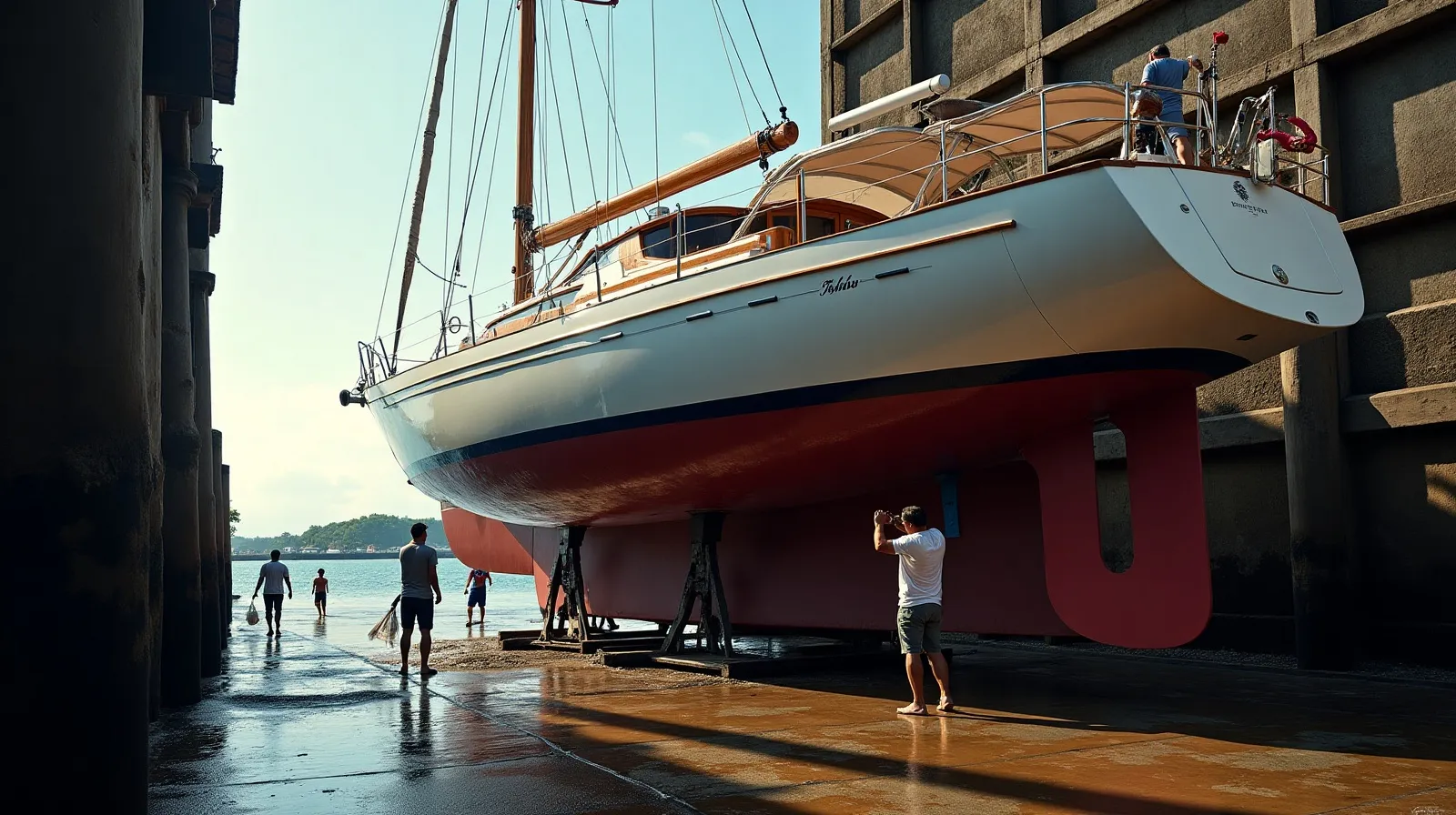
Emergency Haul Contacts: Who to Call When a Hull Needs Out Now
When a hull needs to come out of the water now — a leaking stern gland, impact damage, a failing through-hull — Bali’s options are real but narrow, and the moment to learn them is before the bilge pump makes the decision for you. As of 2026 the island has no large commercial travel lift open to visiting yachts: an emergency haul here means a slipway or marine railway around Benoa for vessels up to roughly 25–30 metres, a mobile crane at a hard quay for lighter craft up to about 10–15 tonnes, or a tidal grid or careening berth on the Serangan flats as damage control between tides. Anything larger works its emergency afloat and then routes to the travel-lift yards of Batam, Singapore or northern Australia. This note sets out who to call, in what order, and what each route can genuinely deliver in a hurry.
First, the disclosure that matters double in a safety context: kurakuramarina.com is an independent information and coordination desk, not the port authority, a salvage company, or the operator of any yard. In a life-threatening situation your first calls are to the vessel’s flag-state emergency procedures and the Indonesian search-and-rescue authority, BASARNAS — nothing on this page replaces them. What our desk does is the layer underneath: knowing which slipway has a free cradle this week, which crane operator answers at 06:00, and which diver can be at your berth in an hour.
The Call Order That Works
- Call one: stabilise. For active flooding, the useful first responders are close at hand — the marina or harbour office on VHF, neighbouring crews with spare pumps, and a commercial diver for an external patch or a plug from outside. Divers reach a Serangan or Benoa berth fast by road, and a wooden plug, collision mat or epoxy patch applied early converts an emergency into a scheduled haul.
- Call two: the desk or your agent. One call that fans out to the slipway operators, crane hire and yard trades beats six calls made from a flooding engine room. Send LOA, beam, displacement and draft with the first message — every minute saved on dimensions is a minute earned on the cradle.
- Call three: the insurer. Most policies require notification before repairs begin, and surveyors here are used to working with the local yards. Photographs from the diver’s inspection, timestamped, are worth taking even mid-crisis.
What Each Emergency Route Delivers
Slipways and marine railways. The realistic full haul-out route in Bali, as our haul-out and dry dock guide details. In an emergency the constraints are cradle fit and queue: a slipway mid-haul cannot simply eject its current occupant, so the desk’s value is knowing which of the yards around Benoa’s boatyard scene has capacity today. Indicatively, a slipway round trip runs from several hundred to a few thousand US dollars by size, with emergency response commanding a premium for the disruption it causes — confirmed in writing, even in a hurry, because a number agreed on the phone at dawn has a way of growing by dusk.
Mobile crane lift-out. For tenders, dayboats, sportfishers and light catamarans up to roughly 10–15 tonnes, a crane with spreader bar and slings at a hard quayside is often the fastest water-to-hard route on the island — hours, not days, when the operator and a blocking spot align. The non-negotiable is sling placement by someone who understands your hull; a crane rescue that crushes a stabiliser fin trades one insurance claim for two.
Tidal grids and careening. With around two metres of spring range on the Serangan flats, drying out is the traditional damage-control move for shallow-draft catamarans, wooden boats and workboats: a few hours of access per tide to plug, patch, or replace a transducer while the water is away. It is triage, not treatment — no controlled hull support, weather exposure, and real risk if the seabed or forecast disagrees — but it has saved a great many hulls a great deal of water over the years.
The regional run. Above 25–30 metres, or for damage beyond local hardstand capability, the honest answer is stabilise afloat and route to a regional travel-lift yard — Batam and Singapore lead, at indicative lift rates of USD 8–15 per foot for lift, wash and relaunch. The desk arranges escorts, weather routing and yard booking so the delivery passage is a plan rather than a hope.
Before It Happens: The Five-Minute Preparation
Every boat based here should hold a one-page emergency sheet: vessel dimensions and displacement, hull material and lifting points, insurer’s emergency line, agent’s number, and the desk’s WhatsApp. Add the boat’s own vulnerabilities — the through-hull the survey flagged, covered in the kind of preventive work our berth-plus-repair guide schedules — and review it each season alongside the weather planning in our monsoon mooring guide, because the wet season is when lines chafe, anchors drag and emergency calls cluster. Fleet operators institutionalise exactly this: Komodo Luxury’s operations desk keeps dimension sheets and haul contacts current for every vessel in its charter fleet, which is why fleet emergencies here tend to read as brisk logistics rather than drama. The full trades directory that backs all of it — divers, engineers, shipwrights — lives at marine services.
Who do I call first if my boat is taking on water in Bali?
In immediate danger: your flag-state emergency procedure and BASARNAS, Indonesia’s search-and-rescue authority, plus the marina or harbour office on VHF for nearby assistance. Once people are safe, a commercial diver for an external patch and one coordination call — desk or agent — to line up pumps, a cradle or a crane. Dimensions in the first message.
Can a yacht be hauled out urgently in Bali?
Yes, within honest limits: slipways around Benoa handle vessels to roughly 25–30 metres subject to cradle fit and queue, mobile cranes lift lighter craft to about 10–15 tonnes within hours when capacity aligns, and tidal grids on the Serangan flats give between-tides access for shallow-draft hulls. There is no big travel lift on the island as of 2026.
What does an emergency haul-out cost?
Indicatively, a Bali slipway round trip runs from several hundred to a few thousand US dollars depending on size, with a premium for emergency response and disruption. Regional travel-lift yards charge in the region of USD 8–15 per foot for lift, wash and relaunch. Even in a hurry, get the number confirmed in writing.
What if my boat is too big for Bali’s slipways?
Stabilise afloat — divers, patches, pumps — then route to a regional travel-lift yard, with Batam and Singapore the usual answers. The desk coordinates the yard booking, weather window and any escort so the passage happens on a plan. Insurers generally prefer this sequence to improvised local lifting beyond rated capacity.
Talk to our yacht desk
Save the number before you need it. In an emergency, send LOA, beam, displacement and your position, and we start the fan-out — divers, slipway, crane, agent and insurer coordination on one WhatsApp thread, costs confirmed in USD.