
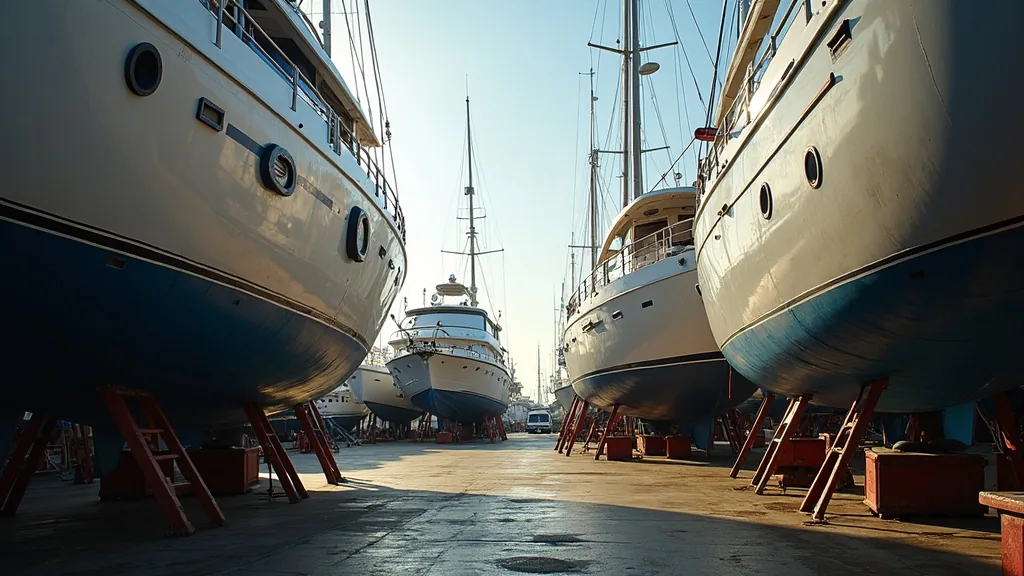
Yacht Haul-Out & Dry Dock in Bali: Costs & Options
As of 2026, yacht haul out in Bali remains a limited, plan-ahead exercise: the island has no large commercial travel-lift open to visiting yachts, so most owners use small slipways, mobile cranes, and tidal grids around Benoa Harbour and Serangan for vessels up to roughly 25–30 metres, and sail to Batam, Singapore, or northern Australia for anything larger. Indicatively, a slipway round trip in Bali runs from several hundred to a few thousand US dollars depending on vessel size, while regional travel-lift yards charge in the region of USD 8–15 per foot for lift, pressure wash, and relaunch. This guide covers where you can actually get out of the water in and near Bali, what it costs, how often to antifoul in Indonesian waters, and what dry-dock capability is planned around Kura Kura Bali and Serangan.
A quick note on who we are: kurakuramarina.com is an independent information resource and marine-services provider covering the Kura Kura Bali development and the wider Serangan–Benoa yachting scene. We are not the official website of the Kura Kura Bali developer.
Why Is Haul-Out Capacity in Bali So Limited?
Bali is a world-class cruising destination, but it has never been a shipbuilding or repair hub. Indonesia’s serious yard capacity sits in Batam, Surabaya, and other commercial ports, while Bali’s waterfront land around Benoa is tightly held and increasingly earmarked for tourism development. The result is a mismatch: hundreds of visiting and locally based yachts, charter phinisi, and dive boats operate out of Benoa and Serangan, but hardstand space is scarce and heavy lifting equipment is scarcer.
Two practical consequences follow. First, haul-out slots in Bali are booked informally and fill quickly ahead of the April–October dry season, when most owners want antifouling done — and when a hull needs out urgently, the call order in our emergency haul contacts guide applies. Second, insurers increasingly require out-of-water surveys under controlled conditions — proper slings or a well-maintained cradle — which pushes larger or higher-value yachts toward regional travel-lift yards rather than local improvised solutions.
Yacht Haul Out in Bali: What Are Your Options Today?
Slipways and marine railways
The traditional workhorses around Benoa are slipways: the vessel settles onto a cradle that is winched up rails until the hull is clear of the water. Slipways here suit monohulls, motor yachts, and wooden phinisi in the small-to-medium range, and they remain the most realistic full haul-out route in Bali as of 2026. The key checks before committing are cradle fit for your hull shape (deep fin keels and wide catamarans are the awkward cases), maximum tonnage, and what work is actually permitted on the hardstand — some slipways allow antifouling and welding, others restrict spray work.
Tidal grids and careening at Serangan
Serangan and the surrounding flats have a long tradition of careening — drying a boat out on a sandbank or simple grid between tides. With Bali’s tidal range of roughly two metres on springs, this works for shallow-draft catamarans, traditional wooden boats, and workboats needing quick jobs: anode changes, transducer swaps, patch antifouling, or an inspection before survey. It is not a substitute for a proper haul-out. You get a working window of a few hours per tide, no controlled support of the hull, and real risk if weather or the seabed does not cooperate.
Mobile crane lift-out
For smaller vessels — tenders, dayboats, sportfishers, and light catamarans up to roughly 10–15 tonnes — a mobile crane with spreader bar and slings at a hard quayside is a common solution. It is quick and flexible, but sling placement needs someone who understands your hull, and you still need somewhere legal and practical to block the boat afterwards.
What Bali does not have (as of 2026)
- No 50–150 tonne travel-lift open to visiting yachts, of the kind standard in Phuket, Langkawi, or Batam.
- No covered paint sheds for full topside respray work.
- Limited certified disposal for old antifouling residue and oils — responsible yards manage this, but ask.
If your project is bigger than a bottom job — osmosis treatment, shaft and rudder work, structural repair — read our guide to yacht refit and repair in Bali, because the haul-out method and the work scope have to be planned together.
How Much Does a Yacht Haul-Out Cost in Bali and Nearby Indonesia?
Prices vary widely with vessel size, yard, and scope, but as of 2026 a straightforward yacht haul out in Bali or nearby Indonesian yards typically falls within these indicative ranges:
| Item | Indicative range (USD) | Notes |
|---|---|---|
| Slipway round trip, Bali (up to ~60 ft) | $600 – $2,500 | Haul, block, relaunch; varies with tonnage and cradle needs |
| Travel-lift round trip, regional yards | $8 – $15 per foot | Batam/Bintan and comparable yards; usually includes pressure wash |
| Mobile crane lift (small craft) | $300 – $1,000 | Crane hire plus rigging; short jobs only |
| Hardstand storage, 40–50 ft | $10 – $30 per day | Scarce in Bali; cheaper on longer commitments |
| Pressure wash | $150 – $400 | Sometimes bundled with the lift |
| Antifouling, materials + labour (45 ft monohull) | $1,500 – $4,000 | Depends heavily on paint brand and prep required |
| Anodes, full replacement set | $150 – $600 | Genuine-spec anodes cost more; fit them anyway |
Disclaimer: these figures are indicative planning numbers as of 2026, not quotations. Exchange rates, paint choice, hull condition, and access all move the total. Always confirm a written scope and price with the yard before you commit — and budget a contingency of 15–20 percent, because underwater surprises are the rule, not the exception.
How Often Should You Antifoul in Indonesian Waters?
Indonesian waters are warm (28–30°C year-round) and nutrient-rich, which means fouling grows fast. Practical cycles look like this:
- Antifouling repaint: every 12–18 months for vessels in regular use, versus 24 months or more in temperate waters. Charter boats working hard in marine-park areas often repaint annually.
- In-water hull cleaning: every 6–10 weeks by diver between haul-outs keeps performance up and stretches the paint — use soft pads so you polish, not strip, the ablative coating.
- Anodes and propellers: check anodes at every clean and replace at every haul; a foul-release propeller treatment is worth the money in these waters.
Ablative (self-polishing) paints in a tropical-grade formulation generally outperform hard paints for cruising yachts here. Whatever you choose, insist on proper prep — a cheap haul-out with poor sanding and thin coats simply brings the next haul-out forward.
What Dry-Dock Capability Is Planned Around Kura Kura and Serangan?
Kura Kura Bali is the long-term development of Serangan Island in Denpasar, granted Special Economic Zone (SEZ) status in 2023. The site already operates marina berthing with a fuel dock, and the masterplan envisages the marina expanding in phases as the wider island development progresses — with marine technical services and boatyard capability among the facilities a full-service marina of this ambition would logically include over time.
Honesty matters here: as of 2026 there is no full-scale travel-lift or dry dock operating at Kura Kura open to visiting yachts, and phased masterplans evolve. Treat any future haul-out capability at Serangan as something to verify close to your planned dates rather than build a passage plan around today. If and when serious lift capacity does arrive at Kura Kura, it would genuinely change the equation for yacht owners in Bali — closing the gap that currently forces bigger boats to Batam or Australia. We track this closely and update our guides as the development publishes firm milestones.
Where Do Bigger Yachts Haul Out Instead?
- Batam and Bintan (near Singapore): the strongest combination of travel-lift capacity, skilled labour, and price in the region — but it is a serious passage of well over 900 nautical miles from Bali, so most owners fold it into a cruising rotation rather than a dedicated trip.
- Singapore: premium facilities and standards at premium prices; practical for superyachts and warranty-sensitive work.
- Surabaya and Java’s commercial ports: ship-grade slipways and dry docks that can take steel vessels and large wooden phinisi; less yacht-oriented, so owner supervision matters.
- Northern Australia (Darwin, Cairns): full-service yards with Western compliance standards, at correspondingly higher labour rates.
- South Sulawesi: the traditional home of phinisi building around Bulukumba retains beaching and slipway know-how for large wooden hulls — often the most cost-effective route for a phinisi bottom job or major timber refit.
Planning a Haul-Out from Bali? We Can Help
Coordinating a yacht haul out in Bali — or deciding whether to do the work here versus Batam or Sulawesi — is mostly about local knowledge: which slipway fits your hull, who preps a bottom properly, and how to sequence surveys, paint, and parts so you are not paying hardstand fees while waiting for a courier. Our team arranges exactly this through our marine services desk: haul-out and slipway coordination, antifouling and anode packages, survey support, and full project management for larger refit and repair work, drawing on a boatbuilding network that reaches from Serangan to the phinisi yards of South Sulawesi. Part of Juara Holding Group — operating from Bali across Indonesia since 2015.
Get a haul-out plan and indicative quote: message us on WhatsApp +62 811-3941-4563 or email bd@juaraholding.com with your vessel type, length, and preferred dates, and we will map out the most sensible option for your boat and budget.