
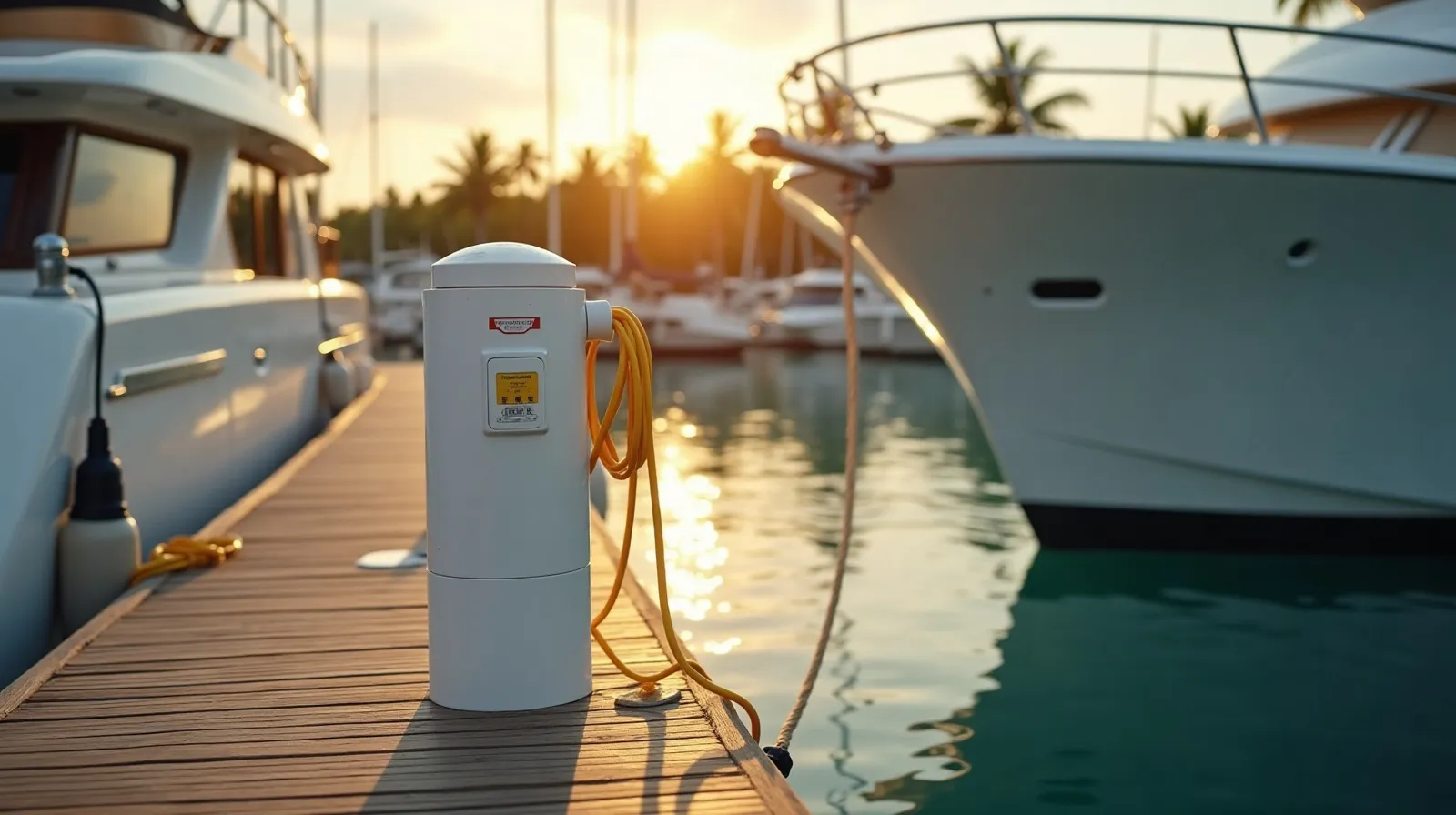
Marina Wi-Fi, Water and Power: Utility Standards Compared
Ask a berth holder what actually shapes daily life at a dock and the answer is rarely the view: it is the three utilities — shore power, water and connectivity — and whether they behave. Here is the honest Bali picture as of 2026: shore power follows Indonesia’s 220–230 V / 50 Hz standard with pedestal capacity that varies sharply by facility; dock water exists but should be treated as technical water unless proven otherwise; and marina Wi-Fi is a courtesy layer you plan around, not on. None of this is a complaint — it is a checklist. Boats that arrive with the right adapters, a filtration habit and a data plan enjoy Bali immediately; boats that assume Mediterranean pedestal culture spend their first week improvising.
The standing disclosure: kurakuramarina.com is an independent information and marine-services platform for the Serangan–Benoa waterfront. We do not operate the basins we describe, and utility provision is set by each facility, not by us. What follows is the standards picture our desk verifies against real boats, updated as the build-out around the Kura Kura Bali SEZ raises the baseline.
Shore Power: What the Pedestal Actually Gives You
Indonesia runs 220–230 V at 50 Hz, which suits European-specified boats directly and gives 60 Hz North American builds the familiar decision: run a frequency converter, or run sensitive loads through the inverter and treat shore power as a battery charger. At the working waterfront today, expect single-phase supply in the 16–32 amp class as the norm — enough for charging, refrigeration, lighting and moderate air-conditioning discipline, not for running a full hotel load flat out. Three-phase and higher-amperage superyacht supply is exactly what the phased SEZ marina development is being designed to add; the current honest position for larger vessels is generator-supplemented berthing, covered from the berth-class angle in our superyacht berths overview. Two practical notes our engineers repeat: carry your own adapter set including a reversed-polarity tester, because pedestal wiring conventions vary; and meter your consumption — electricity in Bali is billed on top of the berth, not bundled, a structure explained in the berthing rates guide.
Water: Technical Until Proven Potable
Dock water on this coast is best classified as technical water: fine for washdown, fine for tank-filling if you filter and treat, not something to drink straight from the hose anywhere in Indonesia. The disciplined routine is a three-stage habit — sediment filter at the hose, tank treatment or UV on the boat, and bottled or delivered gallon water for direct drinking, which is inexpensive and universal in Bali. Boats with watermakers face a different calculus: the Serangan lagoon and Benoa basin are working harbours, so most crews run their membranes offshore and use dock water for everything else. Quality varies by facility and season; ask, taste nothing, test if you are storing long-term. It is the same verify-first logic we apply to what a berthing fee actually includes — assumptions are where budgets and stomachs get hurt.
Wi-Fi and Connectivity: the Courtesy Layer and the Real Layer
Marina Wi-Fi in Bali is a shared courtesy service: adequate for messaging at the office, honest performance at the far pontoon not guaranteed. The real connectivity layer — the one professional crews and remote workers actually use — is Indonesian mobile data, which around Serangan and Benoa is strong, inexpensive and trivially available, backed up by satellite for redundancy. We wrote the full working-from-the-dock playbook, including plans, routers and realistic speeds, in Working From the Marina; the one-line summary is that a local data SIM in a good router outperforms any marina network on the island, and crews should budget for it as a utility, not an extra.
Comparing Standards: Today’s Working Stop vs the Coming Baseline
The useful comparison for a berth holder is not Bali versus Monaco; it is Bali-today versus Bali-as-designed. Today’s Serangan waterfront is a working yacht stop — single-phase pedestals, technical water, courtesy Wi-Fi — and it functions if you equip for it. The 120–140-berth marina being developed under the SEZ master plan is specified to international standards, which in utility terms historically means metered three-phase power at superyacht berths, potable-grade water treatment and fibre-backed connectivity as infrastructure rather than courtesy. When those specifications are published and commissioning begins, this comparison gets rewritten; until then, treat every glossy claim — anyone’s — as unverified and equip the boat for the working standard. Long-stay boats should also read the utility line items alongside the term structure in our long-stay berthing guide, because metering is where a bargain berth quietly becomes an ordinary one. Crews heading onward — many boats here stage for Komodo charters through operators like Komodo Luxury — can treat Bali as the last full-service utility stop before the east.
What shore power standard do Bali marinas use?
Indonesia’s grid standard: 220–230 V at 50 Hz. Pedestals at the working waterfront are typically single-phase in the 16–32 amp class, with electricity metered and billed on top of the berth. Sixty-hertz boats should plan on a frequency converter or inverter-mediated loads. Higher-amperage and three-phase superyacht supply is part of what the phased SEZ marina build-out is designed to add.
Can I drink or tank the dock water in Bali?
Treat it as technical water. Use it for washdown freely; for tanks, filter at the hose and treat aboard; for drinking, use bottled or delivered gallon water, which is inexpensive everywhere in Bali. Quality varies by facility and season, so ask before assuming — and if you run a watermaker, most crews make water offshore rather than in the working basins.
Is marina Wi-Fi in Bali good enough to work from?
Plan around it, not on it. Marina Wi-Fi is a shared courtesy layer that thins with distance from the office. The dependable solution is Indonesian mobile data — strong and inexpensive around Serangan and Benoa — in a decent router, with satellite as redundancy for professional loads. Budget connectivity as a utility line item and you will never think about it again.
Are utilities included in Bali berthing fees?
Generally no for electricity, which is metered and billed on top, especially for boats running significant loads. Water and Wi-Fi arrangements vary by facility — sometimes bundled, sometimes charged, sometimes courtesy. Read the utility clauses in any berthing agreement as carefully as the headline rate; over a long stay, metering is where the real cost difference between two facilities usually lives.
Talk to our yacht desk
Tell us your boat’s electrical spec and stay length, and we confirm the current pedestal, water and connectivity reality for your berth in USD in writing — adapters to arrange, plans to buy, no surprises at the meter.