
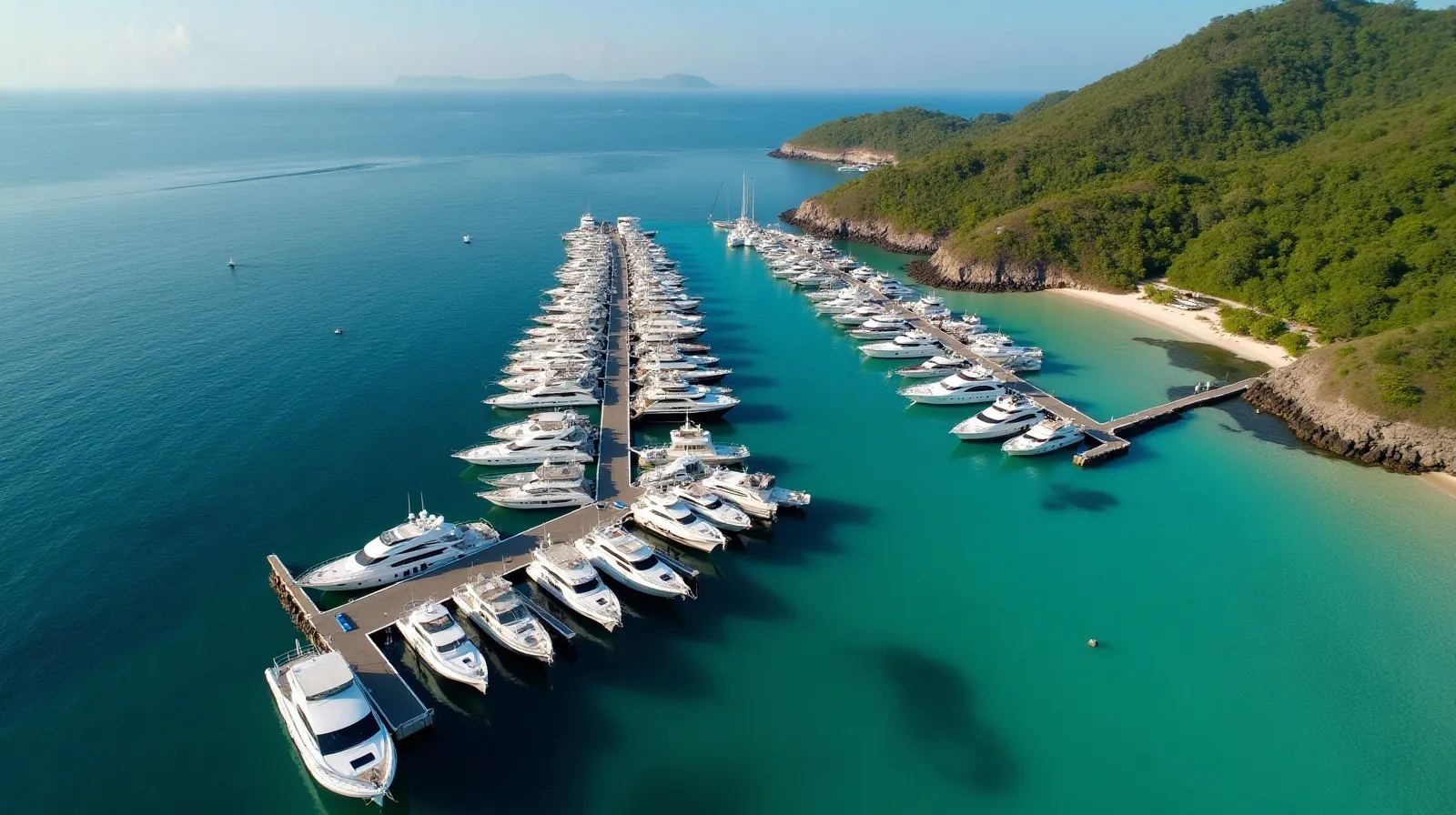
Long-Stay Berthing in Bali: Rate Structures Worth Asking For
Answer first: long-stay berthing in Bali is negotiated, not listed, and the per-metre arithmetic rewards commitment. Against a visiting-yacht benchmark of roughly USD 1–3 per metre per day, monthly wet berths in the region settle around USD 15–30 per metre per month, and annual agreements typically land a further 10–30 percent below the monthly run-rate — with the exact landing point decided by what you ask for before signing, not after. This guide sets out the rate structures that actually exist on the Serangan–Benoa waterfront as of 2026, the concessions worth requesting, and the clauses that quietly decide whether a long stay is a bargain or merely a berth.
The standing disclosure: kurakuramarina.com is an independent information and marine-services platform. No complete public tariff sheet has been published for the Kura Kura Marina development, so every figure here is an informed regional benchmark, clearly labelled as such — the full estimate logic sits in our berthing cost analysis and the structural breakdown in the berthing rates guide. When operators publish firm tariffs, these pages get updated; that is the point of them.
The Three Tiers of Commitment
Southeast Asian marinas price against length overall and reward duration in three recognisable tiers. Daily is the premium tier — transiting boats pay the top of the per-metre band for flexibility. Monthly is the working tier for a Bali season: expect the USD 15–30 per metre band for standard wet berths, with position, beam and utilities moving you inside it. Annual is the relationship tier: a lower per-metre rate than the monthly run-rate, and — more valuable than the rate itself — priority standing when the facility allocates haul-out slots, event access or berths in a new phase. The seasonal shape of demand, and why June–September commitments should be made earliest, is mapped in Booking a Bali Berth by Season.
What to Ask For Before You Sign
Long-stay terms are a menu, and most of it is only served on request:
- Rate-lock horizon: how long the quoted per-metre rate holds. In a market with a superyacht-grade development arriving, a two-season lock has real monetary value.
- Founding-fleet terms: new marinas across Asia have historically opened with attractive early-commitment structures to seed a resident fleet. Register interest early — the mechanism is our berth booking and waitlist page — and ask explicitly what early berth holders receive.
- Lay-up versus active rates: a boat sitting unused with power off costs the facility less to host than a lived-aboard boat drawing full services; some facilities recognise this in the rate, some only if asked.
- Utilities treatment: metered electricity is standard and fair, but confirm the tariff per kWh and whether water and Wi-Fi are bundled — over twelve months, metering differences outweigh headline-rate differences, as our utility standards comparison shows in detail.
- Included movements: tender storage, dinghy dock rights, guest berthing for a visiting boat, and the number of in-and-out movements before handling charges apply.
- Care-in-absence: line checks, bilge checks and photo reports while you are away — sometimes a service tier, sometimes a berth-holder courtesy, always worth writing down.
The Clauses That Decide the Real Price
Read four clauses before admiring any rate. Escalation: what the renewal uplift can be, and with how much notice. Relocation: whether the marina can move you to a different berth class — relevant anywhere construction phases are underway. Liability and insurance minimums: confirm your policy matches the agreement’s required cover. Termination: notice periods cut both ways; a low annual rate with a punitive exit is no bargain. None of this is adversarial — it is simply the difference between a berthing agreement read once and a berthing agreement understood. Owners planning around the development’s phasing should pair this with our Serangan SEZ effect analysis, because the market context — capacity arriving in tranches, demand firming at the premium end — is exactly what shapes how generous long-stay terms will remain, a trajectory we project in the 2027 berth market outlook.
Making a Long Stay Earn Its Keep
The boats that get the most from a Bali long stay run it as a base, not a parking space: maintenance cycles scheduled in the quiet months, crew immigration clocks managed with the calendar discipline of our visa-run guide, the family questions — down to whether the dog can come, answered honestly in the pets guide — settled before they become dockside surprises, the boat provisioned and crewed for short-notice use, and the island’s position exploited — Komodo two days east, the Gilis overnight, and operators such as Komodo Luxury running the charter side of the same waters if the owner’s calendar cannot fill the boat’s. A berth that hosts an active boat justifies its line in any budget; a berth that hosts a neglected one is deferred maintenance with a monthly invoice. Our desk’s job, when asked, is keeping boats in the first category.
What does long-stay berthing in Bali actually cost?
As of 2026 there is no published tariff for the Kura Kura Marina development, so honest numbers are regional benchmarks: roughly USD 15–30 per metre per month for standard monthly wet berths, against USD 1–3 per metre per day for visitors, with annual agreements typically 10–30 percent below the monthly run-rate on a per-metre basis. Superyacht terms are negotiated case by case.
What should I negotiate beyond the headline rate?
The menu items that move the real cost: a rate-lock horizon, utilities tariffs and what is bundled, lay-up versus active status, included tender and guest-berth rights, care-in-absence checks, and haul-out priority. Over a year, these clauses usually matter more than a dollar either way on the per-metre figure.
Do new marinas offer better terms to early berth holders?
Historically across Asia, yes — new facilities commonly seed a founding fleet with attractive early-commitment structures before standard tariffs settle. The practical move in Bali is registering on the berth waitlist early and asking directly what first-tranche berth holders receive; commitments made before a facility’s tariff hardens tend to be the best terms it ever offers.
Is an annual berth worth it if I only sail half the year?
Run the arithmetic both ways: six months at monthly rates versus twelve at the annual per-metre rate, then price the intangibles — guaranteed berth in peak season, haul-out priority, and a boat that stays in commission with care-in-absence checks. For most owners using Bali as a base for the eastern cruising grounds, the annual structure wins once those are counted.
Talk to our yacht desk
Send your LOA, beam and intended stay, and we come back with the current realistic per-metre picture, the concessions worth requesting and the waitlist position to take — in USD, in writing, on one WhatsApp thread.