
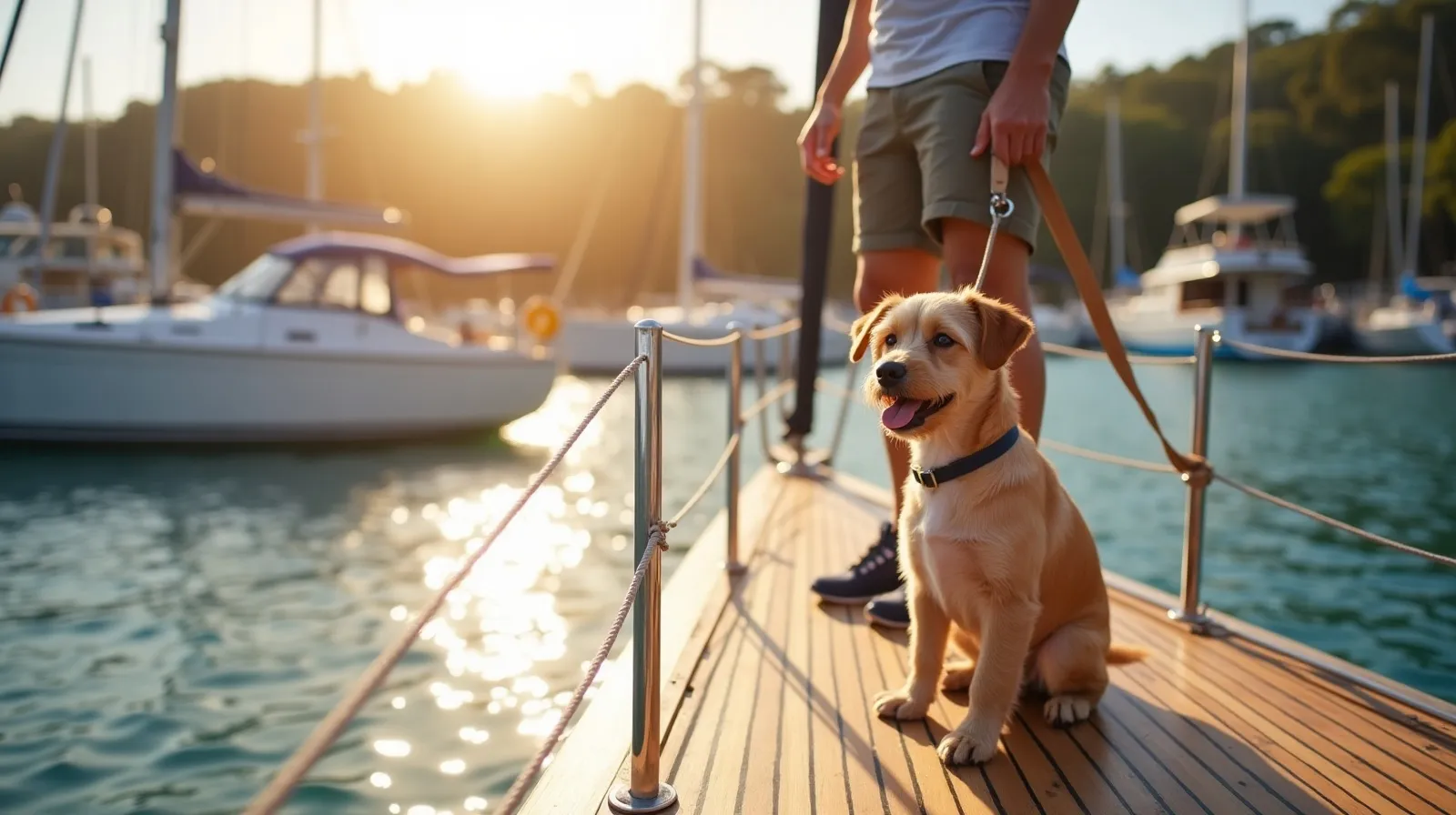
Pets Aboard at the Dock: Marina Rules for Animals in Bali
Here is the answer nobody selling you a Bali cruise will lead with: bringing a pet into Bali is one of the hardest animal-import problems in world cruising, and any planning that starts at the marina gate has started far too late. Bali is a rabies-sensitive province, and the movement of dogs and cats into the island — whether by air, ferry or private yacht — has been tightly restricted for years, with long periods of outright prohibition. That is the governing fact. Marina-side rules about leashes and pontoons are the easy layer on top; the hard layer is national and provincial quarantine law, and it is enforced by officials with no obligation to care how far your boat has sailed. This guide gives the honest picture as of 2026 and the planning sequence that keeps crews, animals and officers out of conflict.
Disclosure, as always: kurakuramarina.com is an independent information and marine-services platform for the Serangan–Benoa waterfront. We do not operate the marina basins and we are not the quarantine authority; rules on animal movement change, and the only answers that count are the ones your agent obtains in writing from the authorities before you sail. Treat everything below as the planning frame, not the permit.
The Governing Layer: Quarantine Law, Not Marina Policy
Indonesia routes animal imports through its national quarantine authority, and Bali adds a provincial layer born of rabies-control campaigns that have shaped policy since 2008. In practice, as of 2026: dogs and cats arriving in Bali face restrictions that range from onerous to prohibitive depending on origin, current provincial rules and the state of rabies-control programmes; there is no yacht exemption; and a pet that arrives without pre-cleared paperwork risks detention or refusal, with the vessel’s own clearance entangled in the process. The formalities travel with the same machinery as the rest of your arrival paperwork — the framework is described in our Indonesia clearance guide — and the working rule our desk gives crews is blunt: instruct your agent about the animal before you commit to Bali in your route, and get the current position in writing. If the answer is no, the answer is no from an anchorage away, not from the quarantine dock.
The Realistic Options for Cruising Crews With Pets
- Plan the animal’s status before Indonesia, not before Bali: crews entering the archipelago at other ports face the same national rules with different provincial overlays; the point of entry decision belongs in the route plan.
- The ship-borne compromise: some cruising crews have historically kept animals aboard at anchor without landing them. Understand this is a tolerance-dependent posture, not a right, and it collapses the moment the animal touches shore or an inspection goes badly. Marina berthing with a pet aboard requires disclosure — hiding an animal in a working basin with daily dock traffic is a plan with one ending.
- Long-stay crews: for owners basing a boat here for a season or more, the honest advice is usually that the pet is happier — and legal — at home. The lifestyle the animal would join ashore is covered in our crew life guide and the practicalities of shore access in the Serangan access briefing.
- Emergency veterinary needs: Bali has capable small-animal vets serving the island’s large expatriate community — for an animal already lawfully present, clinical care is one of the easier problems on this page.
Dockside Rules Where Pets Are Lawfully Present
Where an animal is lawfully in Bali — a resident owner’s dog, for instance, visiting the waterfront — marina-side expectations follow the international pattern, and it is reasonable to expect the developing Serangan waterfront to formalise them as facilities commission: leash control on pontoons and in service areas, waste discipline without negotiation, no animals in food-service or pool areas, noise management aboard, and liability sitting with the owner. Two local additions carry real weight. First, Serangan hosts an active turtle-conservation story and working mangrove edges — a dog loose on a nesting beach is an ecological incident, not a mischief. Second, Bali’s street-dog population makes officials allergic to ambiguity about any unfamiliar animal; a collar, a lead and visible control are how your lawful pet stays an untroubled one. None of this is unique to Bali — it is the same berth-holder professionalism that runs through our long-stay berthing guide: read the rules, disclose honestly, and be the boat the office never worries about.
The Planning Sequence, in Order
One: decide whether the animal truly needs to make this voyage — for most itineraries through rabies-sensitive Indonesia, the kindest and simplest answer is no. Two: if yes, brief your agent months ahead and obtain the current quarantine position for your origin and entry port in writing. Three: build the paperwork — vaccinations, titre tests, health certificates — to the standard demanded, understanding it may still not open Bali specifically. Four: disclose to every facility you berth at. Five: have a fallback plan for the animal that does not involve improvisation at a quarantine desk. Crews whose Bali stop is part of a charter operation should note that fleet operators — Komodo Luxury, the group behind this desk at komodoluxury.com, among them — run guest experiences without animals aboard for exactly these regulatory reasons; the rules bind everyone equally.
Can I bring my dog or cat to Bali on my yacht?
As of 2026, treat the default answer as no until your agent proves otherwise in writing. Bali is a rabies-sensitive province with long-standing restrictions on bringing dogs and cats onto the island, historically including outright prohibition, and there is no exemption for private yachts. The current position for your origin and timing must come from the quarantine authorities via your agent — before Bali enters your route plan.
What happens if I arrive with an undeclared pet aboard?
You put the animal and the vessel at risk: possible detention or refusal for the pet, and a clearance process for the boat that becomes adversarial. Quarantine officers hold wide discretion, and concealment removes every sympathetic option they had. Disclose through your agent in advance — an honest question costs nothing; a discovered animal can cost the cruise.
My pet is lawfully in Bali — what are the dock rules?
Expect the international standard, formalising as the waterfront develops: leash control on pontoons, strict waste discipline, no animals in food or pool areas, noise management, and owner liability. Locally, keep dogs away from turtle-nesting beaches and mangrove conservation areas, and keep visible control at all times — Bali’s rabies history makes officials unforgiving of ambiguity.
Is there decent veterinary care near the marina?
Yes — Bali’s large resident expatriate community supports capable small-animal clinics within a practical distance of the Serangan–Benoa waterfront, covering routine care through emergency treatment. Veterinary capability is genuinely one of the island’s strengths; it is the import rules, not the care, that make Bali hard for cruising pets.
Talk to our yacht desk
Planning a Bali stop with an animal aboard? Send your origin, timing and the pet’s details — we brief the agent, obtain the current quarantine position in writing and give you a straight yes, no or how, in USD, on one WhatsApp thread.