
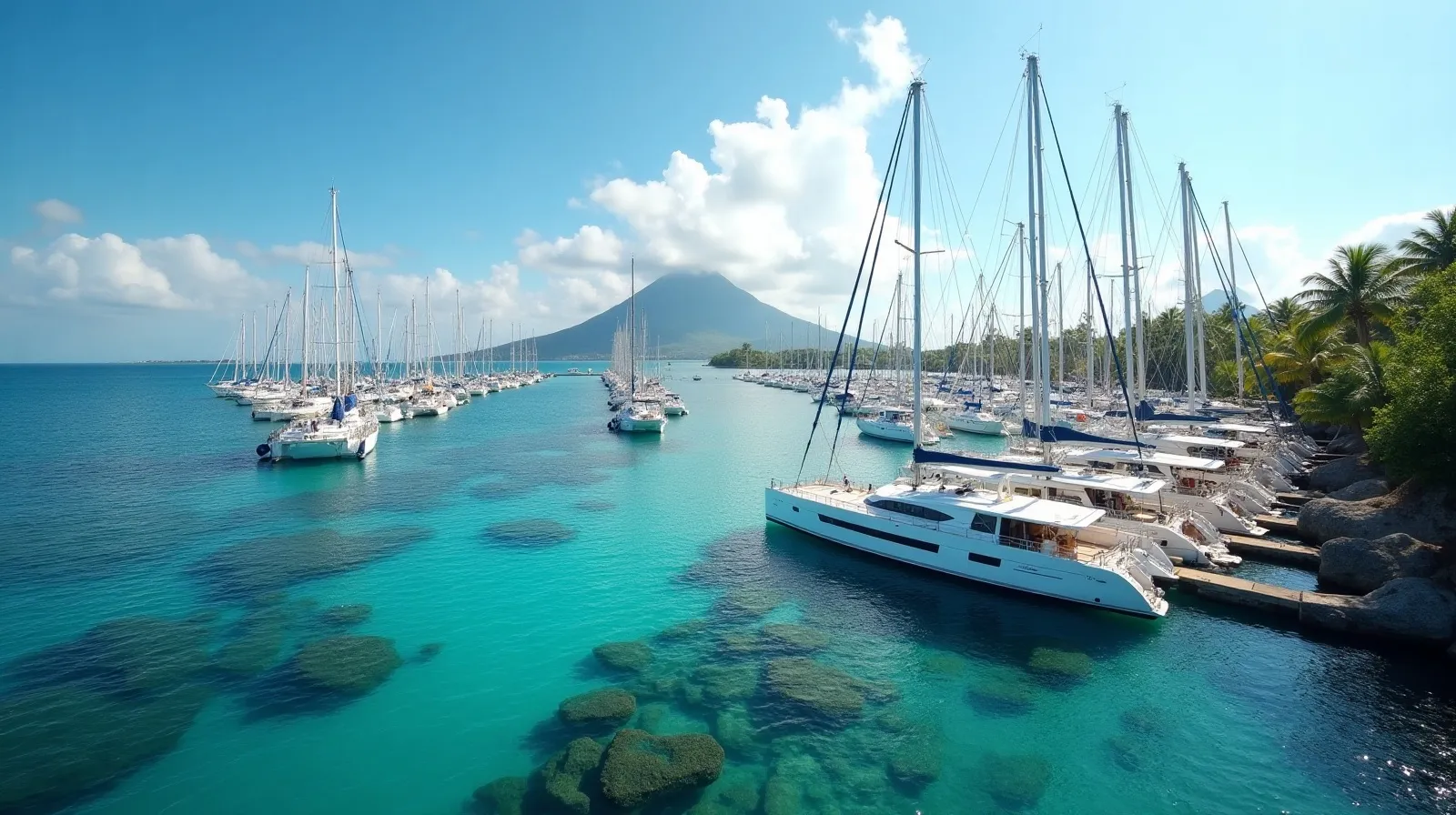
2027 Bali Berth Market: Capacity, Pricing and the Superyacht Push
Here is the 2027 Bali berth market in three sentences. Supply: still structurally short — a working commercial port at Benoa, a tide-sensitive working yacht stop at Serangan, and a handful of moorings and small facilities islandwide, with the first meaningful capacity additions arriving in tranches as the Kura Kura SEZ marina phases commission. Demand: firming from every direction at once — the eastern charter boom staging through Bali, rally and delivery traffic, a resident-owner base growing with the island’s wealth economy, and a superyacht segment that Indonesia is courting explicitly. Price: benchmarks holding in the regional bands — roughly USD 1–3 per metre per day visiting, USD 15–30 per metre per month long-stay, superyachts negotiated — with the pressure pointing up at the premium end as capacity that meets superyacht standards remains the scarcest asset in the market. Everything below is the reasoning behind those sentences, honestly labelled where it is projection.
Disclosure, as on every page: kurakuramarina.com is an independent information and marine-services platform. No operator has published a complete 2027 tariff for the new Serangan capacity as of this writing, so figures here are regional benchmarks and analysis — the estimate logic lives in our berthing rates guide — and this page is updated as real numbers land.
Supply: What Actually Exists and What Is Actually Coming
Bali’s berthing stock has been essentially static for a decade against a demand curve that has not been. The baseline inventory — surveyed across the island in our Indonesia marina landscape review — concentrates in Benoa Bay, with the Serangan waterfront operating as the working yacht stop: berthing, fuel dock, services, in shallow tide-managed water. The change vector is singular and specific: the SEZ marina development, master-planned at 120–140 berths to superyacht standards and building since April 2025, whose phased commissioning we track in the opening timeline and whose knock-on effects we analyse in the SEZ effect briefing. The honest supply statement for 2027: expect the market to begin absorbing new capacity during the planning horizon, in tranches, with exact commissioning dates unpublished — which means 2027 is the transition year in which scarcity and new supply negotiate in public for the first time.
Demand: Four Currents Running the Same Direction
- The eastern staging trade: Komodo and Raja Ampat seasons pull boats through Bali for crew, fuel and provisioning; every growth year east of Lombok is a demand year for Bali berthing.
- Transit and rally traffic: the archipelago’s position on the world cruising circuit routes international fleets through Bali seasonally, each of them a berth-night customer and a percentage of them future long-stay converts.
- The resident base: villa owners, entrepreneurs and the island’s expanding wealth economy are commissioning and importing boats that need permanent homes — the buyer pipeline our boats-for-sale desk sees weekly, and the same base that turns docks into communities, as the events briefing describes.
- The superyacht push: Indonesia has spent the decade courting large-yacht tourism, and Bali is positioned as the archipelago’s flagship gateway — the strategic case argued in our superyacht hub analysis. Large yachts consume disproportionate berth-metres and pay disproportionate rates; a small number of them moves a small market’s economics.
Pricing: Where the Bands Move and Where They Do Not
Projection, labelled as such. The visitor band (USD 1–3 per metre per day) has regional gravity holding it in place — Bali competes with Phuket and Malaysia for transient boats and cannot reprice transients aggressively without losing them. The long-stay band (USD 15–30 per metre per month) firms first at the top: quality berths with services convert to committed tenants fastest, and the concessions worth negotiating today — documented in our long-stay rate structures guide — are exactly the terms that get harder to obtain as each tranche fills. The superyacht segment is where 2027 genuinely reprices: capacity built to 40–60-metre standards is the scarcest berth-metre in Indonesia, the first credible supply of it sets its own comparables, and negotiated is the only honest rate card. Meanwhile the utilities and services line quietly matters more than the headline in every band — metering, as our utilities comparison shows, is where two similar rates diverge into different annual costs.
Positioning for 2027, by Owner Type
Transient owners: book the season window early — June to September fills first, and the seasonal mechanics in our berth-by-season guide apply with more force as demand firms. Long-stay owners: commit before tariffs harden; early-tranche conversations at new capacity have historically been the best terms on offer, and the waitlist costs nothing. Superyacht programmes: engage per-vessel and early — draft, beam and power requirements make every large berth a negotiation, and the first allocations will favour programmes already known to the waterfront. Charter investors: the berth is part of the business case now — fleets working the Bali–Komodo axis, among them Komodo Luxury’s sailing programmes, demonstrate what utilisation the market supports, and a secured berth is operating infrastructure, not overhead. And every type shares one discipline: treat unpublished specifications, dates and tariffs as pending until operators publish them — in a transition year, the premium on verified information is at its highest.
Will Bali berthing get more expensive in 2027?
Most likely unevenly: visitor rates are anchored by regional competition and should stay in the familiar USD 1–3 per metre per day band; long-stay terms firm first at the quality end as committed tenants absorb the best berths; and the superyacht segment reprices most, because superyacht-standard capacity is the scarcest asset and the first credible new supply sets its own comparables. All projection — no 2027 tariff is published as of this writing.
How many berths does Bali actually have?
No single audited number exists, which is itself a market signal. The working picture: commercial berthing in Benoa Bay, the Serangan waterfront operating as a working yacht stop, and scattered small facilities and moorings islandwide — against which the SEZ development’s master-planned 120–140 berths represent the largest single capacity addition in the island’s history, arriving in phases rather than at once.
Is 2027 the year the new marina capacity opens?
Treat it as the transition horizon rather than a promised date: construction has been underway since April 2025, commissioning is expected in tranches, and no exact public opening dates are published as of this writing. The planning consequence is the same either way — owners who register interest and position early meet the new capacity on better terms than owners who wait for the ribbon.
Should I buy a boat in Indonesia before or after the capacity arrives?
The berth question should lead the boat question, not follow it: a purchase with a secured berth strategy — today’s working waterfront now, waitlisted for the new tranches — is robust under every 2027 scenario, while a purchase that assumes a berth will materialise is a bet on someone else’s construction schedule. Buy the boat when the programme is ready; hold the berth positions in parallel.
Talk to our yacht desk
Tell us your boat, programme and horizon, and we give you the current berth-market read — what is verifiable, what is pending, and which positions to take this quarter — in USD in writing, on one WhatsApp thread.